


On this page (6)
Key takeaways
- An attendance policy sets working hours, how attendance is recorded, how to report absences and request leave, and what repeated absence leads to.
- For remote and hybrid teams, define attendance as working and reachable during agreed core hours, recorded by each person's own clock-in.
- A no fault attendance policy counts every absence the same way, usually as points, which keeps it simple but blind to reasons.
- FMLA leave can't be counted under a no fault policy, and the EEOC says disability-related absences may need an exception.
- A fair policy uses the same rules for everyone, records people can see, a conversation before discipline and steps in proportion.
An attendance policy is the written set of rules for when employees work and how their attendance is handled. It says which hours they're expected to work, how attendance is recorded, how to report an absence or request leave, and what happens when absences repeat. A fair one is short, applies the same rules to everyone, and never counts leave the law protects. Below is a template you can adapt for a remote or hybrid team.
This is general information, not legal advice. Leave and attendance laws differ by country, state and city, so check the rules where each employee works.
What does an employee attendance policy cover?
A complete employee attendance policy answers six questions:
- Who it covers: employees, contractors, and any roles with different rules.
- Working hours: when people are expected to be working and reachable.
- Recording: how attendance is recorded and how mistakes get corrected.
- Absence: how and when to report that you can't work.
- Leave: how much time off there is and how to request it.
- Repeated absence: what happens when absences or late starts pile up, and what never counts.
For an office team, attendance often means being in the building. For a remote or hybrid team, it means working during agreed hours and being reachable. That makes the recording section matter more, because there's no front desk to notice who came in.
Attendance policy template
Copy the sections below, replace everything in square brackets, and delete what doesn't apply. Plain wording works better than legal-sounding wording, because people follow rules they understand.
1. Purpose and scope
This policy explains how [Company] records attendance and handles absence and leave. It applies to all [employees and contractors], whether they work remotely, in the office or both. [Name any roles with different rules.]
2. Working hours
Your working hours are [number] hours a [day or week]. Everyone should be working and reachable during core hours, [time] to [time] in [time zone], so colleagues in other locations can count on overlap. Outside core hours, you choose when to work, within [limits you set].
3. How attendance is recorded
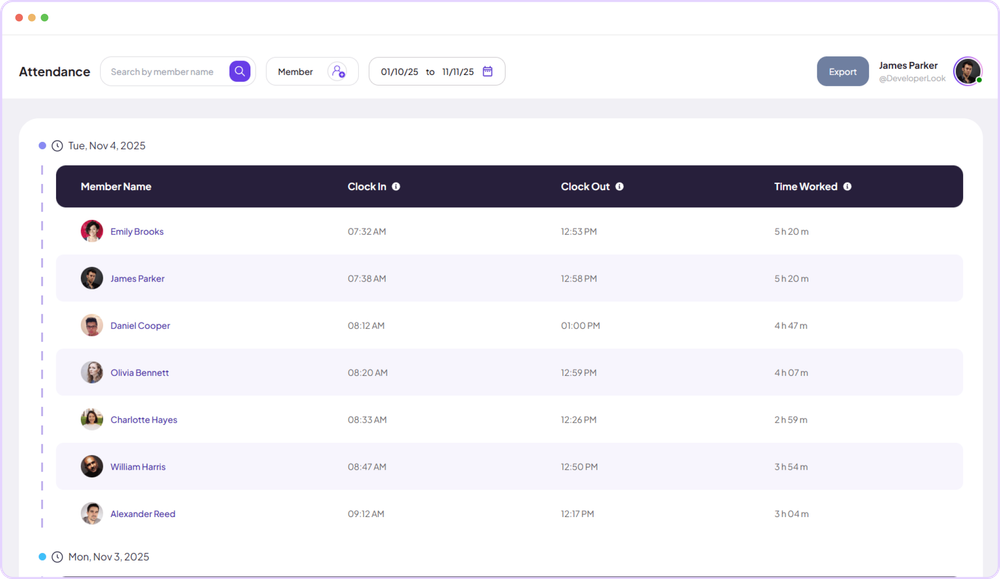
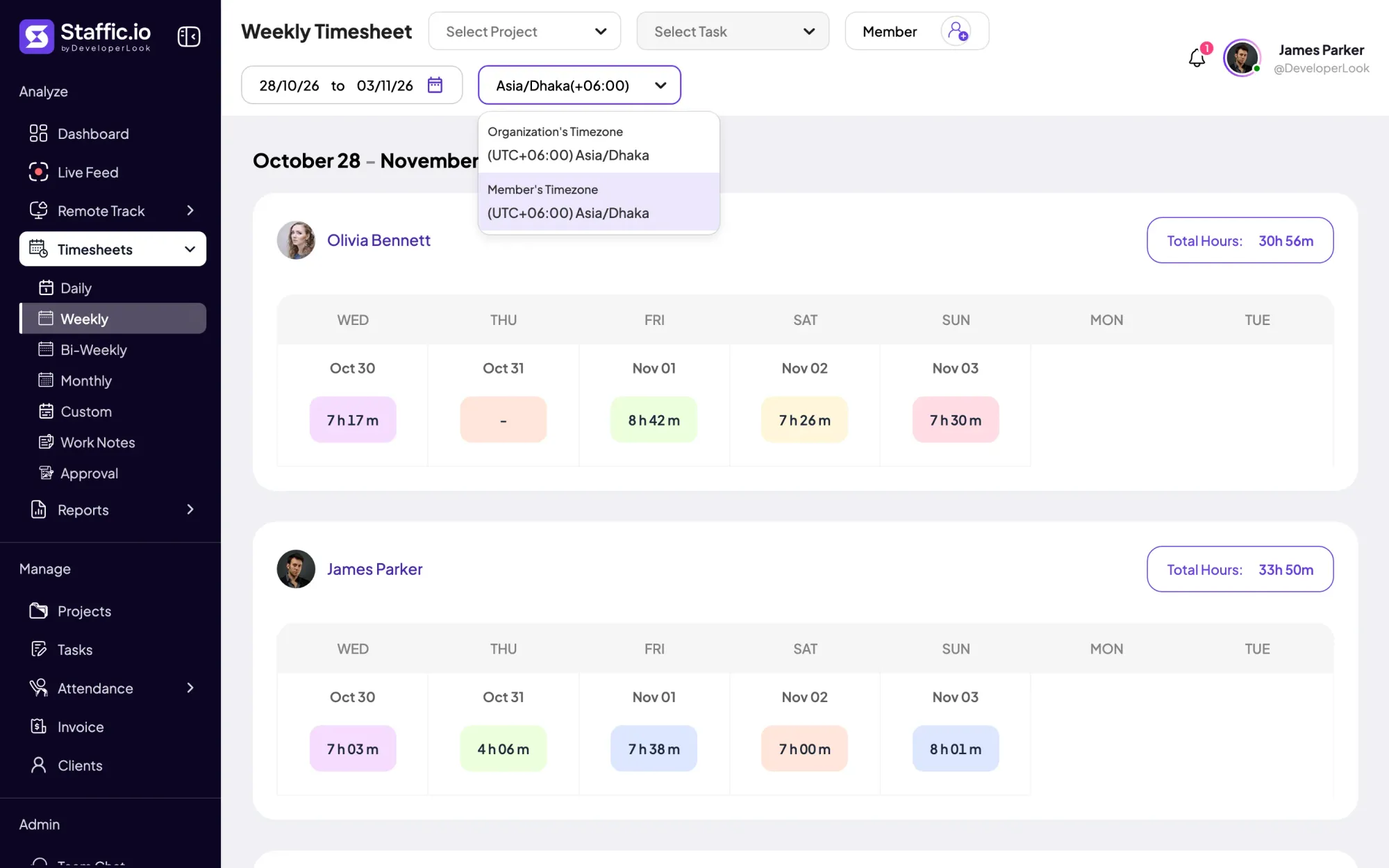
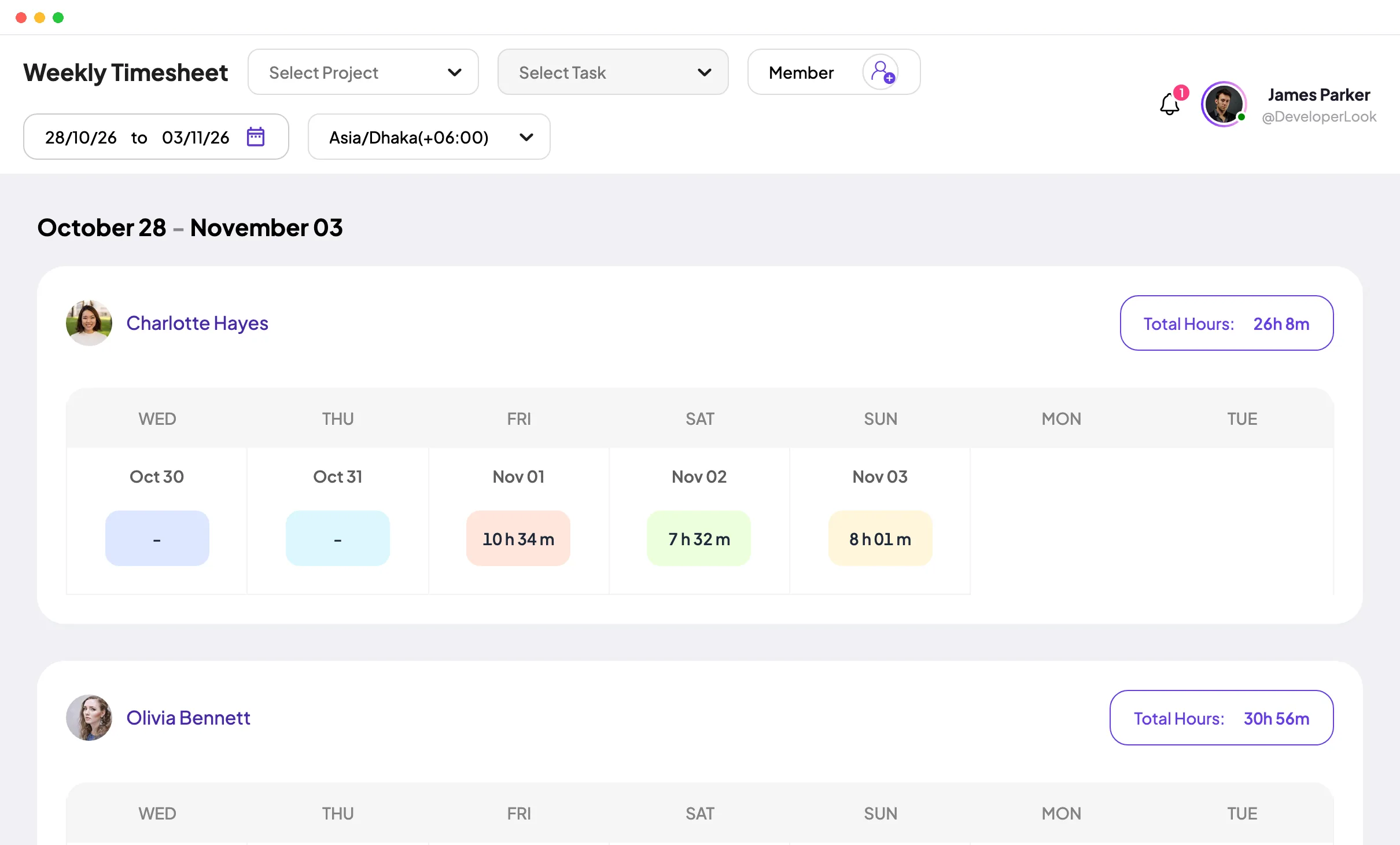
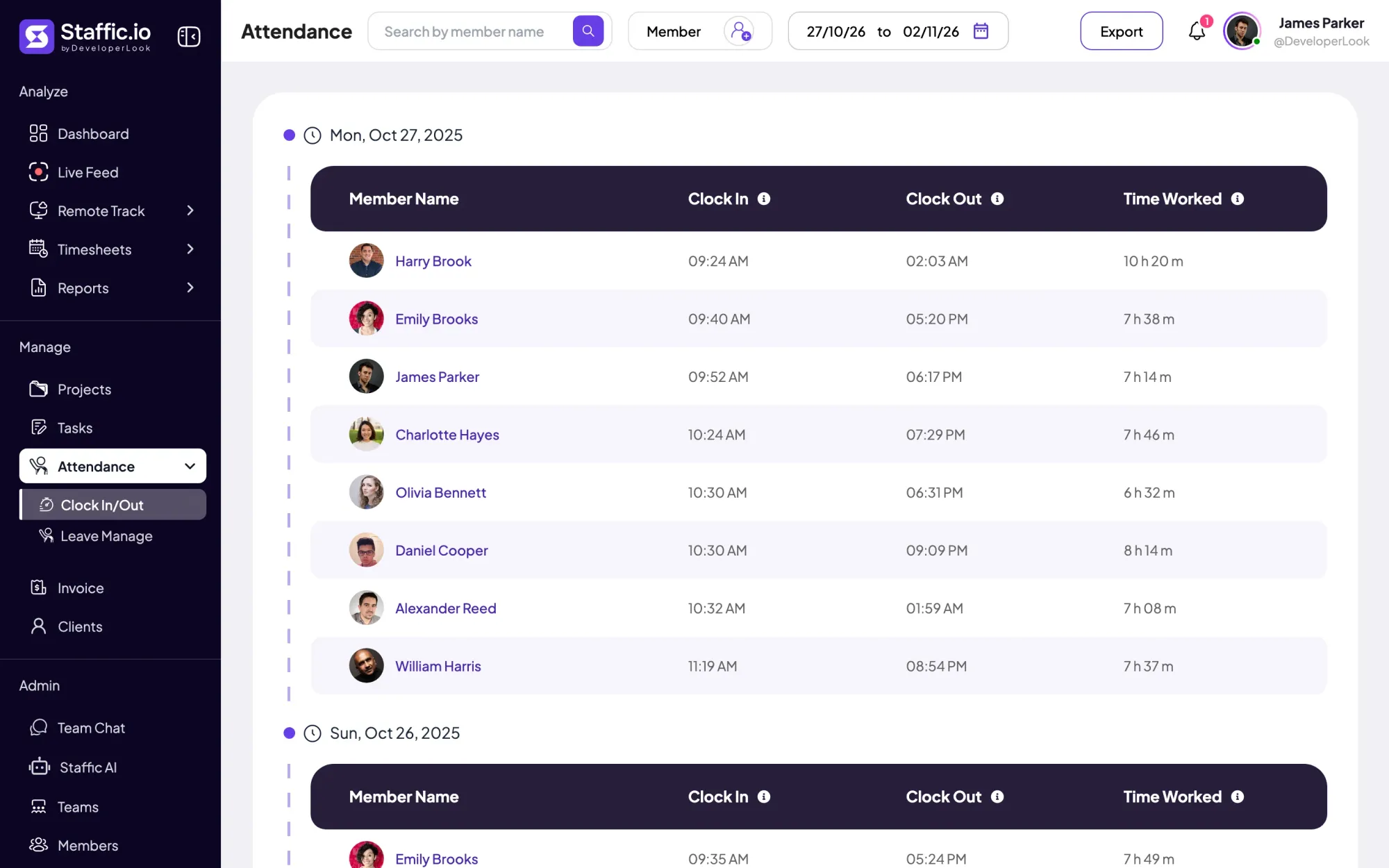
Attendance is recorded when you [start the timer in our time tracking app, or clock in]. Your first recorded time of the day counts as your start and your last as your finish. Record your own time only: starting a timer or clocking in for someone else breaks this policy. If you forget to record time, tell [manager] within [number] days with the reason, and they'll correct it.
4. Reporting an absence
If you can't work on a working day, tell [manager] through [channel] before [time, or the start of core hours]. Say whether you expect to be off for one day or longer. For an absence of more than [number] days in a row, we may ask for [a doctor's note or other evidence] where the law allows it.
5. Leave requests
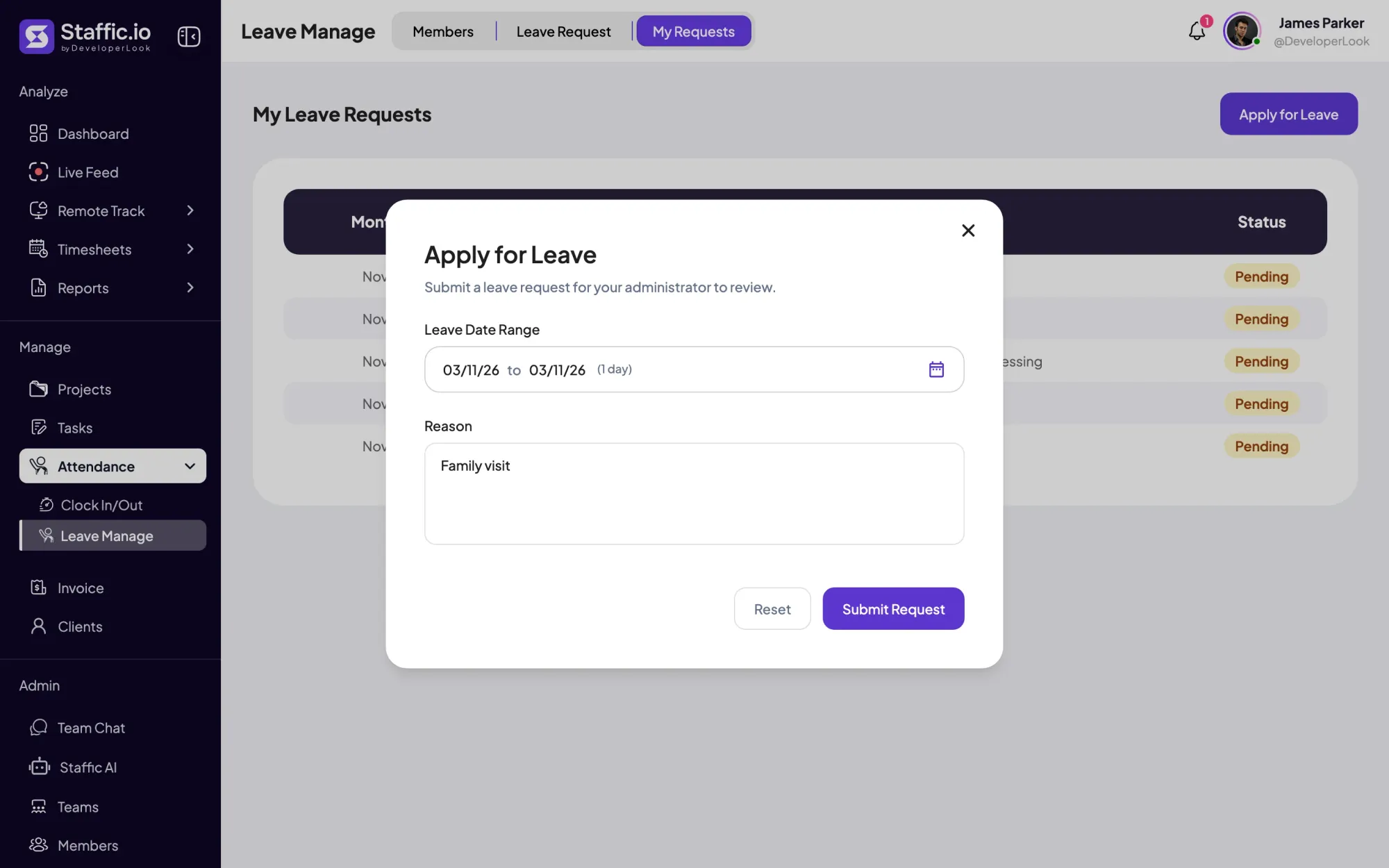
You have [number] days of paid leave a year. Request planned leave at least [number] days ahead through [tool or form]. [Role] approves or declines it within [number] working days. Leave the law protects, such as family and medical leave, follows the legal rules, not this section.
6. Late starts and repeated absence
A late start or absence you report in advance isn't a problem under this policy. Unreported absences, or unannounced late starts that keep happening, lead to these steps: [a private conversation], then [a written note], then [a formal review]. Absences the law protects are never counted.
7. Review and acknowledgment
[Role] reviews this policy every [12 months], and we'll tell you in writing before any change takes effect. I have read and understood the [Company] attendance policy. Name, signature, date.
Keep the "record your own time only" line in section 3 even on a small team. It's the rule that stops buddy punching before it starts.
What is a no fault attendance policy?
A no fault attendance policy counts every absence or late start the same way, whatever the reason. It usually works as a points system: each occurrence adds points, and reaching a threshold triggers a step such as a warning. Points can expire after a set period, so an old absence stops counting. The Equal Employment Opportunity Commission (EEOC) gives a simple example of the idea: no more than five unplanned absences in 12 months before discipline starts.
| Occurrence | Points (set your own) |
|---|---|
| Absence reported in advance | [1] |
| Absence not reported | [2] |
| Late start without notice | [0.5] |
| Leave the law protects | Never counted |
The appeal is that nobody has to judge whose reasons are good enough. The trade-offs are real, though:
| Pros | Cons |
|---|---|
| The same rule for everyone, easy to explain | Treats a sick child the same as a skipped day |
| No need to question people's reasons | Can push people to work while ill to save points |
| Simple to apply from attendance records | Breaks the law if protected leave isn't carved out |
That last point matters most. Under the Family and Medical Leave Act (FMLA), Department of Labor regulations say FMLA leave can't be counted under no fault attendance policies (29 CFR 825.220(c)). The EEOC adds that policies capping unplanned absences may have to be modified as a reasonable accommodation for absences related to a disability. A points system can work for ordinary absences, as long as protected leave is kept out of it from the start.
What makes an attendance policy fair?
Fair attendance policies pass five tests:
- The same rules for everyone. Managers apply each step the same way, and write down when they do.
- Records people can see. Attendance is measured from records employees can check and correct, not from a manager's impression.
- A conversation before consequences. People get the chance to explain a pattern before any formal step.
- Proportion. One missed morning doesn't get the same response as weeks of unreported absence.
- Protected leave stays out. Leave the law protects never counts against anyone.
A policy that fails one of these tests is hard to apply evenly, and uneven rules are where disputes start.
Which absences can't count against employees?
In the US, two federal laws set the floor. This summary reflects the official pages as of October 12, 2026; read them for the details.
- FMLA: covers private employers with 50 or more employees for 20 or more workweeks in the current or previous calendar year. Eligible employees have worked there for 12 months and 1,250 hours, at a location with 50 or more employees within 75 miles. They can take up to 12 workweeks of unpaid, job-protected leave in a 12-month period, for reasons such as a new child or a serious health condition.
- Americans with Disabilities Act (ADA): covers employers with 15 or more employees. The EEOC says leave can be a reasonable accommodation, and an employer may have to grant leave beyond its policy's limit unless that causes undue hardship.
State and local laws can add more protected leave. Write section 5 of your policy so it points to those rules instead of overriding them.
How to write an attendance policy and roll it out
Start from how your team works
Write down the working hours, core hours and leave allowance you already use. A policy that describes reality is easier to follow than one that changes everything at once.
Fill in the template
Keep each section to a few sentences. If a rule needs a paragraph of exceptions, it probably needs rethinking.
Check it against the law
Make sure protected leave never counts toward a step in section 6, and check the leave rules for every place you hire in.
Set up your tools to match
Record attendance the way section 3 says. If your time tracking software also records screenshots or activity, you need an employee monitoring policy as well.
Share it and collect acknowledgments
Send the policy to everyone, answer questions, and ask each person to sign section 7 before it takes effect.
Review it every year
Look at how often section 6 was used and by whom. If one team triggers it far more than others, check whether the rule or the team's setup is the problem.
Good attendance policies are specific about how attendance is recorded, clear about notice, and strict about keeping protected leave out. Start from the template, run the five tests, and collect each person's acknowledgment before the policy takes effect. If repeated absences turn out to be hours recorded but not worked, our guide to time theft covers what to do next.
FAQ
How do you write an attendance policy?
Start from how your team already works, then write short sections on scope, working hours, recording, absences, leave requests, repeated absence and review. Check it against federal, state and local leave laws. Then share it and collect each employee's signed acknowledgment before it takes effect.
What is a fair attendance policy?
A fair attendance policy applies the same rules to everyone and measures attendance from records employees can see and correct. It holds a conversation before any formal step, matches consequences to the pattern, and keeps leave the law protects, such as FMLA leave, out of every count.
What is a good attendance policy?
A good attendance policy is short enough to read in one sitting and specific enough to act on. It names exactly how attendance is recorded, who to tell about an absence and by when, and what each step for repeated absence is, so managers don't have to improvise.
What is a reasonable attendance policy?
A reasonable attendance policy asks only for what the job needs. For a remote team, that can mean core hours for overlap and advance notice of absences rather than exact start times. Consequences grow in steps, and the policy allows the exceptions the law requires.
What is a standard attendance policy?
There's no single legal standard, but a standard attendance policy has seven core sections. They cover who it applies to, working hours, how attendance is recorded, reporting an absence, leave requests, steps for repeated absence, and an acknowledgment. Some employers add a no fault points system.
What is a no fault attendance policy?
A no fault attendance policy counts every absence or late start the same way, whatever the reason, usually as points. Reaching a set threshold triggers a warning or another step. Under Department of Labor rules, FMLA leave can't be counted, and the EEOC says disability-related absences may need an exception.
Can an attendance policy count FMLA leave against an employee?
No. Department of Labor regulations say employers can't use FMLA leave as a negative factor in decisions such as discipline, and FMLA leave can't be counted under no fault attendance policies. Keep protected leave out of your counts so it never adds points or triggers a step.
Sources
- 29 CFR 825.220: Protection for employees who request leave or otherwise assert FMLA rightsU.S. Government Publishing Office (govinfo), Code of Federal Regulations 2024
- Family and Medical Leave ActU.S. Department of Labor, Wage and Hour Division
- Employer-Provided Leave and the Americans with Disabilities ActU.S. Equal Employment Opportunity Commission
- How to Use Clock In/OutStaffic documentation
- How to Use Leave ManageStaffic documentation