


On this page (5)
Key takeaways
- Buddy punching means one employee clocks in or out for another, so the record shows hours the absent person did not work.
- It happens most where a punch is not tied to a person: shared time clocks, shared logins or paper sign-in sheets.
- Personal clock-ins from each person’s own account remove the easiest way to punch for someone else.
- Comparing clock times with tracked work and fixing exceptions before payroll catches what slips through.
Buddy punching is when one employee clocks in or out for a coworker who is late, leaving early or absent. The attendance record then shows hours that person did not work. It is a form of time theft, and it is easiest where a punch is not tied to a person. You stop it by giving everyone a personal clock-in, checking punches against real work, and reviewing exceptions before payroll.
Why does buddy punching happen?
It often starts as a favor rather than a plan. A colleague is stuck in traffic, a friend asks for cover, and one punch becomes a habit. A few conditions make it easy:
- Punches that are not personal. A shared time clock, a shared login or a paper sheet records a time, not a person.
- Unclear rules. Nobody has said how late arrivals, early departures or forgotten punches should be handled.
- No review. When nobody looks at attendance before payroll, mismatches never come up.
How do you spot buddy punching?
One odd day proves little. Look for patterns like these:
| What you see | What it can mean |
|---|---|
| A clock-in with no tracked work after it | Someone else punched in, or the person forgot to start their timer |
| Clock time that does not match tracked hours | A punch that does not reflect real work |
| Several people clocking in at the same minute, day after day | One person punching for others, or simply a shared start time |
| Missing clock-outs that keep getting fixed later | Punches corrected on someone’s behalf |
Each signal has an innocent explanation too, so treat them as reasons to ask, not as proof.
How to prevent buddy punching
Give everyone a personal clock-in
In Staffic, each member clocks in and out from their own account, so a punch belongs to the person who signed in. Never share logins, even for convenience.
Check punches against real work
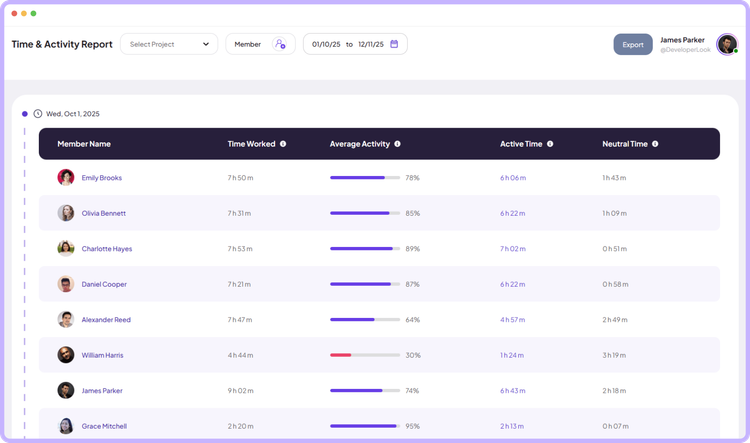
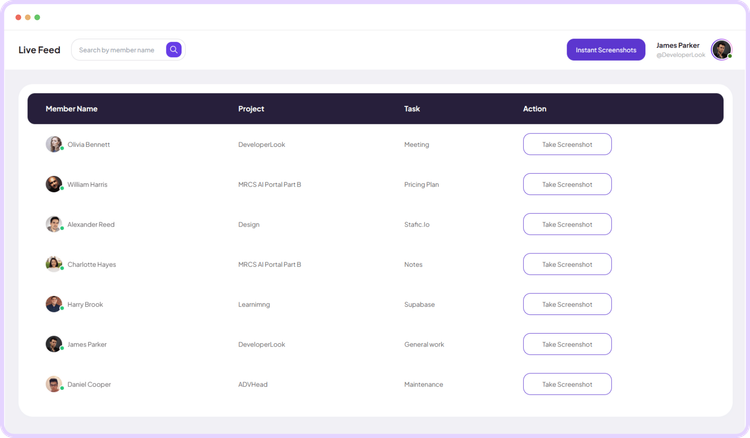
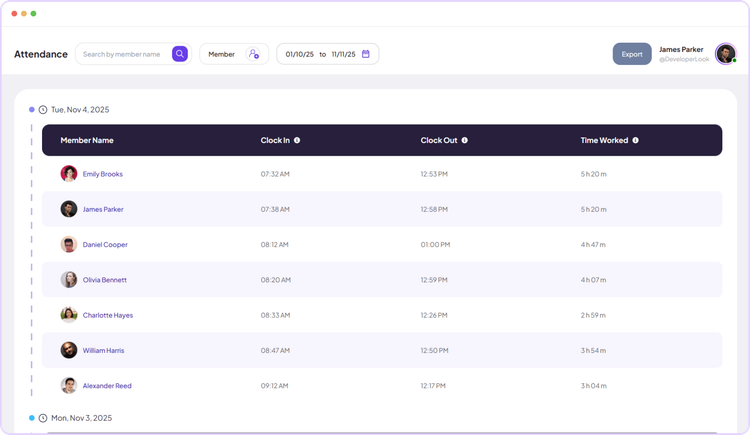
The Clock In/Out log shows clock-in, clock-out and time worked for each member. Compare it with the hours they tracked in the desktop app, in Timesheets or the Time and Activity report.
Write a rule for late starts and fixes
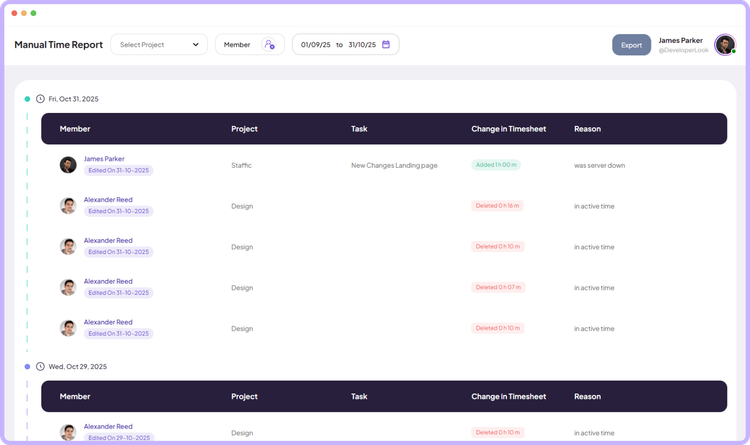
Say how late arrivals are handled, who may correct a punch, and that corrections need a reason. When the honest path is clear, nobody needs a favor.
Fix exceptions before payroll
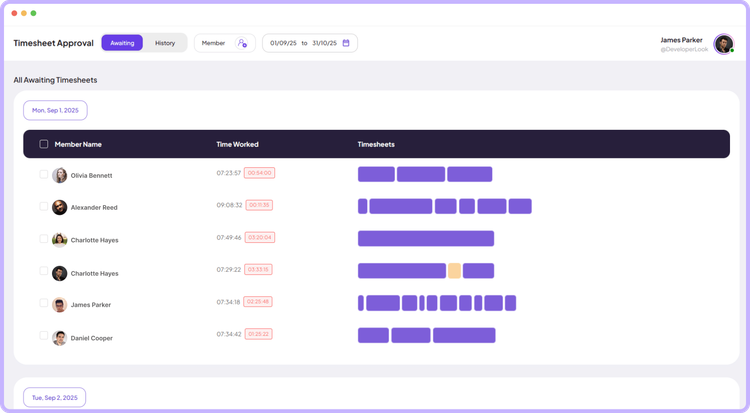
Review missing clock-outs, duplicate punches and clock time that does not match tracked hours, then approve timesheets so only checked hours reach payroll.
Explain why it matters
Buddy punching shifts work onto the people who show up. Framing the rule as fairness to colleagues, not distrust, gets far more support.
Is buddy punching illegal?
It is usually treated as a breach of workplace policy. Like other forms of time theft, it can lead to a warning, a payroll correction or dismissal, depending on your policy and how deliberate it was. Rules differ by country and state, so check local employment law before you set penalties.
This is general information, not legal advice.
What to do if you find it
Talk to both people privately and separately. Find out whether it was a one-off favor or a pattern, correct the payroll, and restate the rule to the whole team without naming anyone. Apply the same response to everyone, every time.
Buddy punching thrives on shared, unchecked punches. Personal clock-ins, a clear rule and a short review before payroll leave little room for it. Read our guide to time theft for the wider picture.
FAQ
What is buddy punching?
Buddy punching is when one employee clocks in or out for a coworker who is late, leaving early or absent, so the record shows hours that person did not work.
How do you prevent buddy punching?
Give everyone a personal clock-in from their own account, compare punches with tracked work, set a clear rule for late starts and corrections, and fix exceptions before payroll.
Is buddy punching illegal?
It is usually treated as a breach of workplace policy and can lead to discipline or dismissal. Rules differ by country and state. This is general information, not legal advice.
What are the signs of buddy punching?
Clock-ins with no tracked work after them, clock time that does not match tracked hours, several people clocking in at the same minute every day, and punches that keep getting corrected later.
Sources
- How to Use Clock In/OutStaffic documentation
- How to Use Timesheet ApprovalStaffic documentation
- How to Use the Time & Activity ReportStaffic documentation