



On this page (10)
- 01What do the Working Time Regulations cover?
- 02Is the working time directive the same as the Working Time Regulations?
- 03What is the 48 hour working week?
- 04What are the maximum working hours in the UK?
- 05How does the working time regulations opt out work?
- 06What rest breaks do the regulations give?
- 07What are the rules for night workers?
- 08How much holiday do the Working Time Regulations give?
- 09What records do employers have to keep?
- 10How can time tracking help you check working hours?
Key takeaways
- The Working Time Regulations 1998 cap a worker's week at an average of 48 hours, normally worked out over 17 weeks.
- Workers aged 18 or over can opt out of the 48 hour week in writing, and can cancel with at least 7 days' notice.
- Adults get a 20 minute break when they work more than 6 hours, 11 hours' rest between working days and weekly rest.
- Almost all workers get 5.6 weeks' paid holiday a year, capped at 28 days, and bank holidays can count towards it.
- Employers keep records that show the weekly, young worker and night work limits are met, and hold them for two years.
The Working Time Regulations 1998 are the UK law that limits working hours and sets minimum rest and holiday. A worker can't work more than 48 hours a week on average, normally averaged over 17 weeks, unless they opt out in writing. Workers also get a 20 minute break when they work more than 6 hours, 11 hours' rest between working days, a weekly rest period and 5.6 weeks' paid holiday a year.
This is general information for employers in Great Britain, not legal advice. We read each rule below on legislation.gov.uk and GOV.UK on 3 November 2026. Some jobs have their own exceptions and the rules change, so check the current guidance or ask an employment adviser before you rely on it.
What do the Working Time Regulations cover?
The Working Time Regulations 1998 (SI 1998/1833) set limits on hours and rights to rest for almost everyone classed as a worker. Here is the short version for adults and for young workers (above school leaving age and under 18):
| Rule | Workers aged 18 and over | Young workers |
|---|---|---|
| Weekly working time | 48 hours a week on average, normally over 17 weeks; workers can opt out | 8 hours a day and 40 hours a week, with no averaging and no opt out |
| Rest break at work | 20 minutes, uninterrupted, when the day is longer than 6 hours | 30 minutes when the day is longer than 4.5 hours |
| Daily rest | 11 hours in a row between working days | 12 hours |
| Weekly rest | 24 hours each week, or 48 hours each fortnight | 48 hours each week |
| Night work | An average of 8 hours in each 24 hours for night workers; no opt out | Aged 16 or 17: usually no work between 10pm and 6am |
| Paid holiday | 5.6 weeks a year, capped at 28 days | 5.6 weeks a year, capped at 28 days |
A contract can give more than these minimums. The regulations apply in England, Wales and Scotland. The sections below explain each rule and what an employer has to record.
Is the working time directive the same as the Working Time Regulations?
They are closely linked, but in the UK the regulations are the law you follow. GOV.UK notes that the 48-hour rule is "sometimes called the 'working time directive' or 'working time regulations'". The explanatory note to the 1998 regulations says they implement Council Directive 93/104/EC, the EU's working time directive, plus the working time parts of a directive on young people at work.
So when a UK manager searches for the working time directive, the rules that apply to their staff are in the Working Time Regulations 1998, as amended since. Changes that took effect on 1 January 2024 covered record keeping and holiday.
What is the 48 hour working week?
Regulation 4 says a worker's working time can't exceed an average of 48 hours for each 7 days, unless the worker has agreed in writing to work more. It is an average, so one long week is fine as long as the average over the reference period stays at 48 hours or below.
- The reference period is normally any 17 weeks of employment. A relevant agreement, such as a collective agreement, can fix successive 17-week periods or extend the period up to 52 weeks.
- New starters who have worked for you for less than 17 weeks are averaged over the time since they started.
- Leave doesn't lower the average. Days of annual leave, sick leave and maternity, paternity, adoption or parental leave are excluded. You replace them with the same number of working days straight after the reference period.
A worked example: over 17 weeks with no leave, a worker logs 782 hours. 782 divided by 17 is 46 hours a week, which is within the limit even if a few of those weeks went past 48.
What counts as working time?
GOV.UK lists what counts towards the 48 hours and what doesn't:
| Counts | Doesn't count |
|---|---|
| Job-related training | Breaks when no work is done, such as lunch |
| Travel that is part of the job, for example a sales rep's visits | Travel to and from a fixed place of work |
| Working lunches, such as business lunches | Paid or unpaid holiday |
| Time on call at the workplace | Time on call away from the workplace |
| Paid extra hours, and unpaid extra hours the worker is asked to do | Unpaid extra time the worker volunteers, such as staying late to finish something |
| Time spent working abroad | Travelling outside normal working hours |
A worker with two jobs should stay within 48 hours on average across both. Some jobs fall outside the 48-hour limit, including the armed forces, emergency services and police, jobs that need 24-hour staffing, domestic servants in a private household, and roles where working time isn't measured and the worker controls it, such as a managing executive.
What are the maximum working hours in the UK?
For most adults, the maximum is an average of 48 hours a week. The regulations set no fixed daily cap for adults, but the 11 hours of daily rest limit how long a working day can run.
Under 18s are different. Regulation 5A limits a young worker to 8 hours a day and 40 hours a week, with no averaging. If they work for more than one employer, the hours are added together.
How does the working time regulations opt out work?
A worker aged 18 or over can agree to work more than 48 hours a week on average. GOV.UK and regulation 5 set the terms:
It must be voluntary and in writing
You can ask a worker to opt out, but you can't dismiss them or treat them unfairly for saying no.
It can be for a set period or open-ended
The agreement can cover a fixed period or apply indefinitely.
The worker can cancel it
They give at least 7 days' notice in writing, or longer if the agreement says so, up to 3 months. You can't force a worker to cancel an opt out either.
You keep a record
Regulation 4(2) requires up-to-date records of every worker who has opted out.
Some workers can't opt out at all, including airline staff, workers on ships or boats, many road transport workers and security guards on vehicles carrying high-value goods. Nobody can opt out of the night work limit.
What rest breaks do the regulations give?
Workers aged 18 and over usually get three kinds of rest:
- A rest break at work: when the working day is longer than 6 hours, one uninterrupted break of at least 20 minutes, which the worker can spend away from their workstation (regulation 12). It doesn't have to be paid; that depends on the contract.
- Daily rest: at least 11 hours in a row in each 24 hours (regulation 10). Finish at 8pm, and the next start is 7am at the earliest.
- Weekly rest: an uninterrupted 24 hours each week, or, if the employer decides, two 24-hour periods or one 48-hour period each fortnight (regulation 11).
Young workers get a 30 minute break after 4.5 hours, 12 hours of daily rest and 48 hours of weekly rest. A collective or workforce agreement can change the details of breaks for adults, and some jobs have exceptions with compensatory rest instead.
What are the rules for night workers?
A night worker is someone who regularly works at least 3 hours during the night period, which is 11pm to 6am unless you agree a different 7-hour period in writing that includes midnight to 5am.
- Night workers' normal hours can't average more than 8 hours in each 24, normally over 17 weeks (regulation 6).
- Where the work involves special hazards or heavy physical or mental strain, the limit is a flat 8 hours in any 24 with no averaging.
- Workers can't opt out of the night work limit.
- You must keep records of night workers' hours that show the limits are met, for at least 2 years.
How much holiday do the Working Time Regulations give?
Almost all workers are entitled to 5.6 weeks' paid holiday a year. Under the regulations this is 4 weeks (regulation 13) plus 1.6 weeks (regulation 13A), capped at 28 days in total.
- Full time: someone working a 5-day week gets at least 28 days. Someone working 6 days a week still gets 28, because of the cap.
- Part time: a worker on 3 days a week gets at least 16.8 days (3 × 5.6).
- Bank holidays: you don't have to give them as paid leave, and you can count them as part of the 28 days.
- Irregular hours and part-year workers: for leave years starting on or after 1 April 2024, they build up leave based on the hours they have worked.
- Carrying leave over: a worker who couldn't take the 4 weeks because they were off sick can carry it into the next leave year, and must take it within 18 months of the end of the year it came from.
Tracking requests and balances in one place makes these rules easier to apply. Our staff holiday planner shows how Staffic records leave requests, approvals and each person's allowance.
What records do employers have to keep?
Regulation 9 asks employers to keep records that are adequate to show they have complied with the weekly limit, the limits for young workers and the night work rules, and to keep them for two years from the date they were made. Since 1 January 2024 the regulation also says:
- You can keep the records in any manner and format you reasonably think fit.
- You don't have to record each worker's daily working hours if you can show compliance without them.
On top of that, you keep the up-to-date list of workers who have opted out of the 48-hour week. In practice, a record of the hours each person actually works is the simplest way to show the average, and it also answers questions about rest between working days.
How can time tracking help you check working hours?
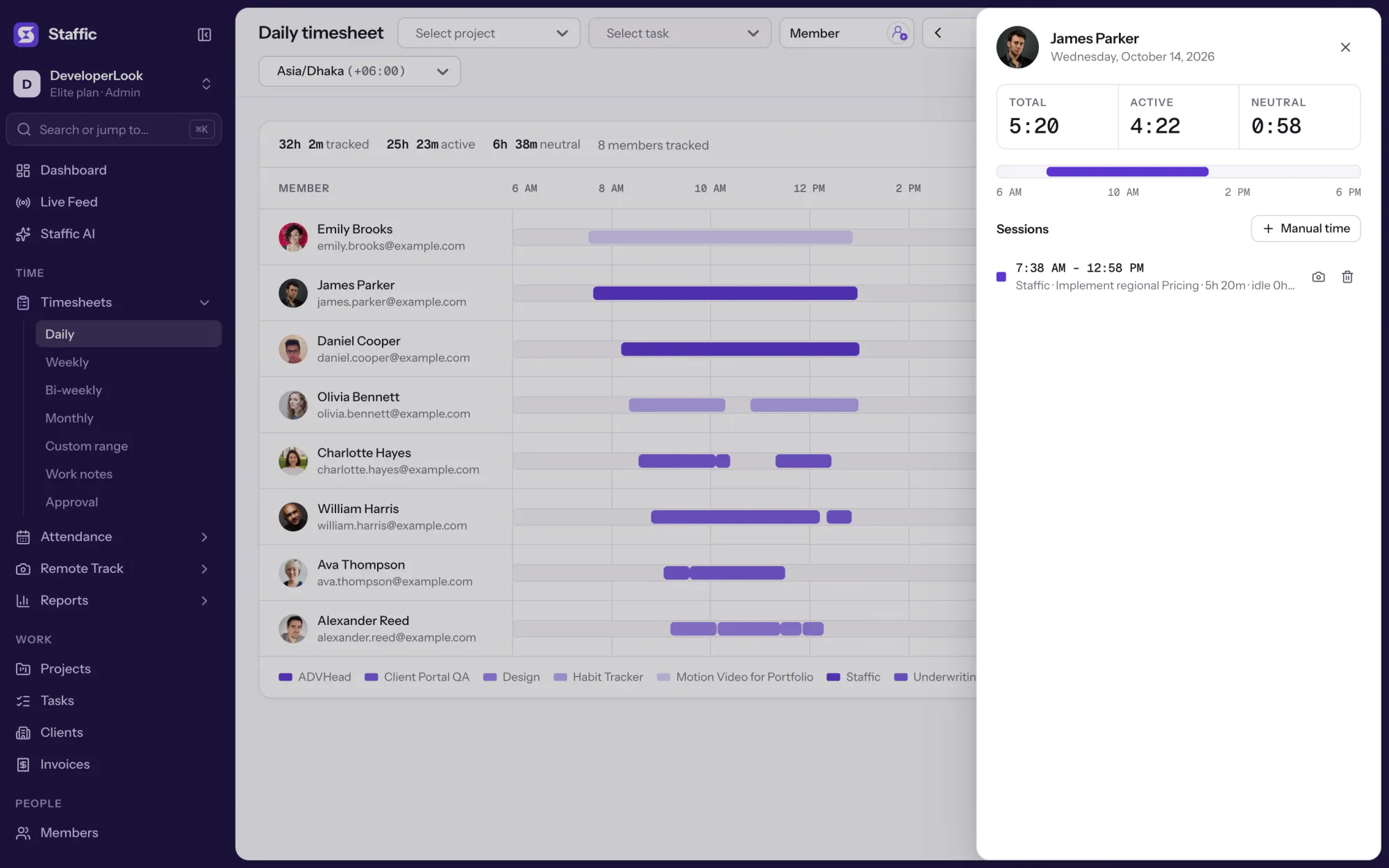
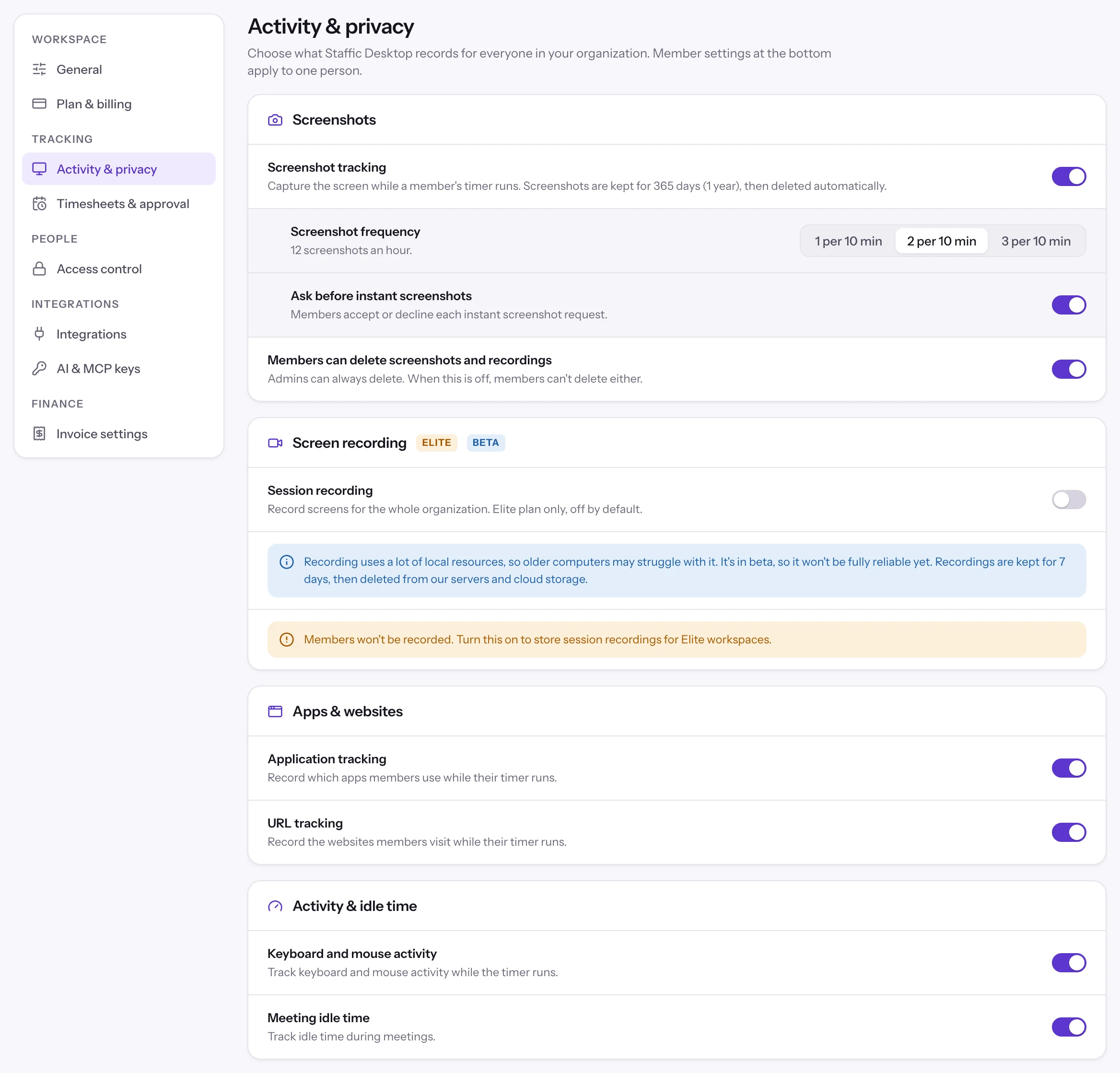
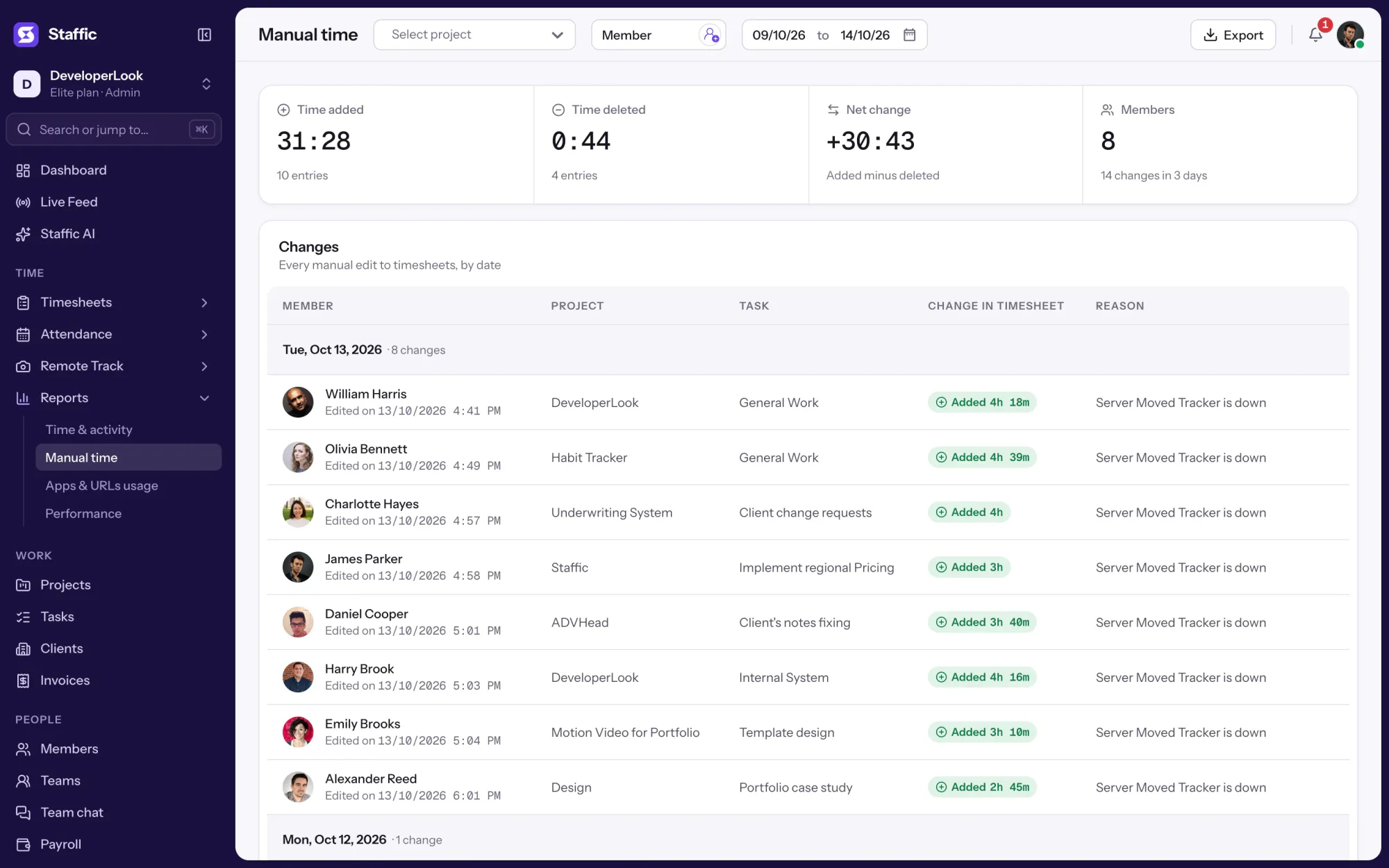
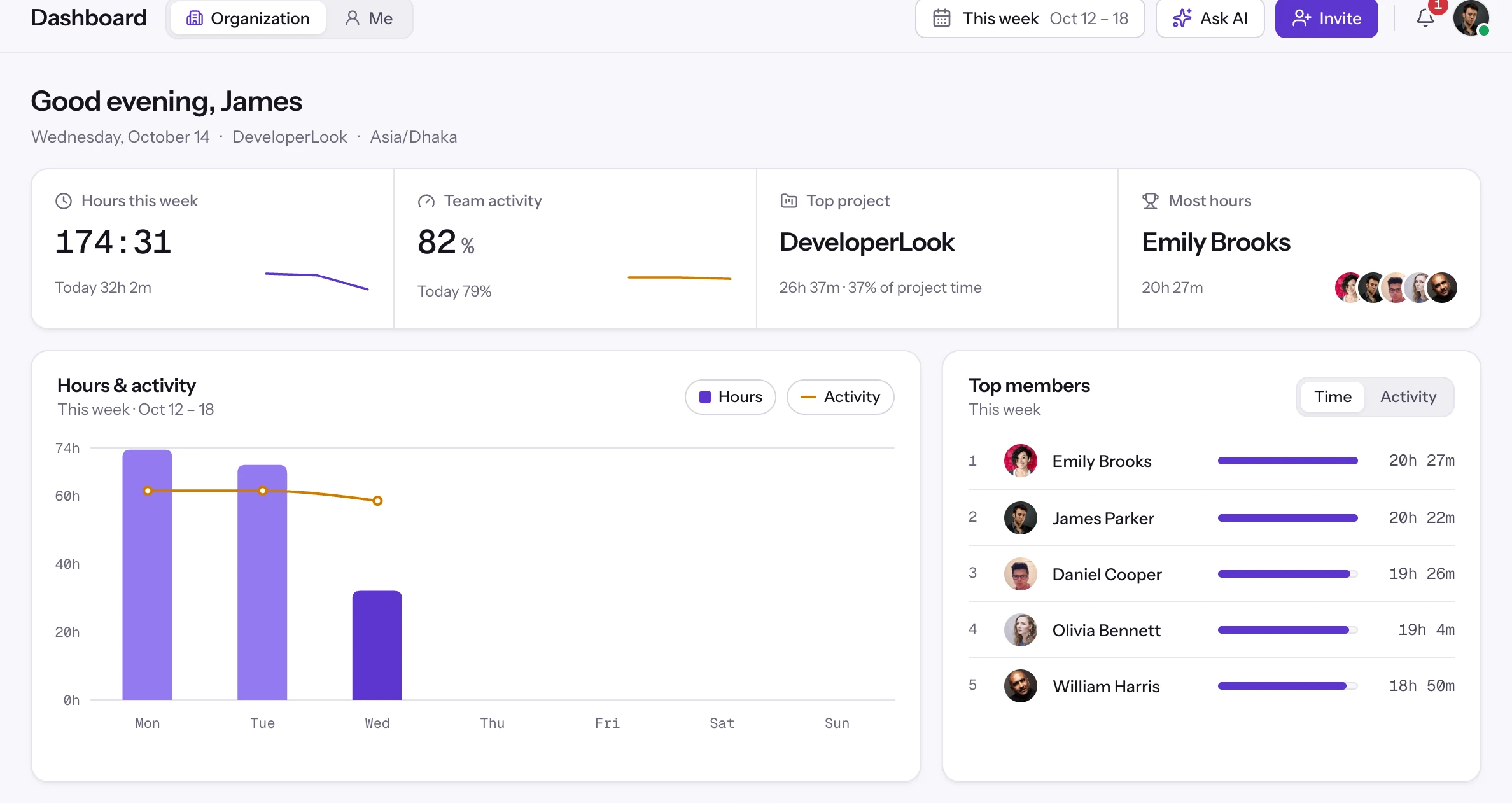
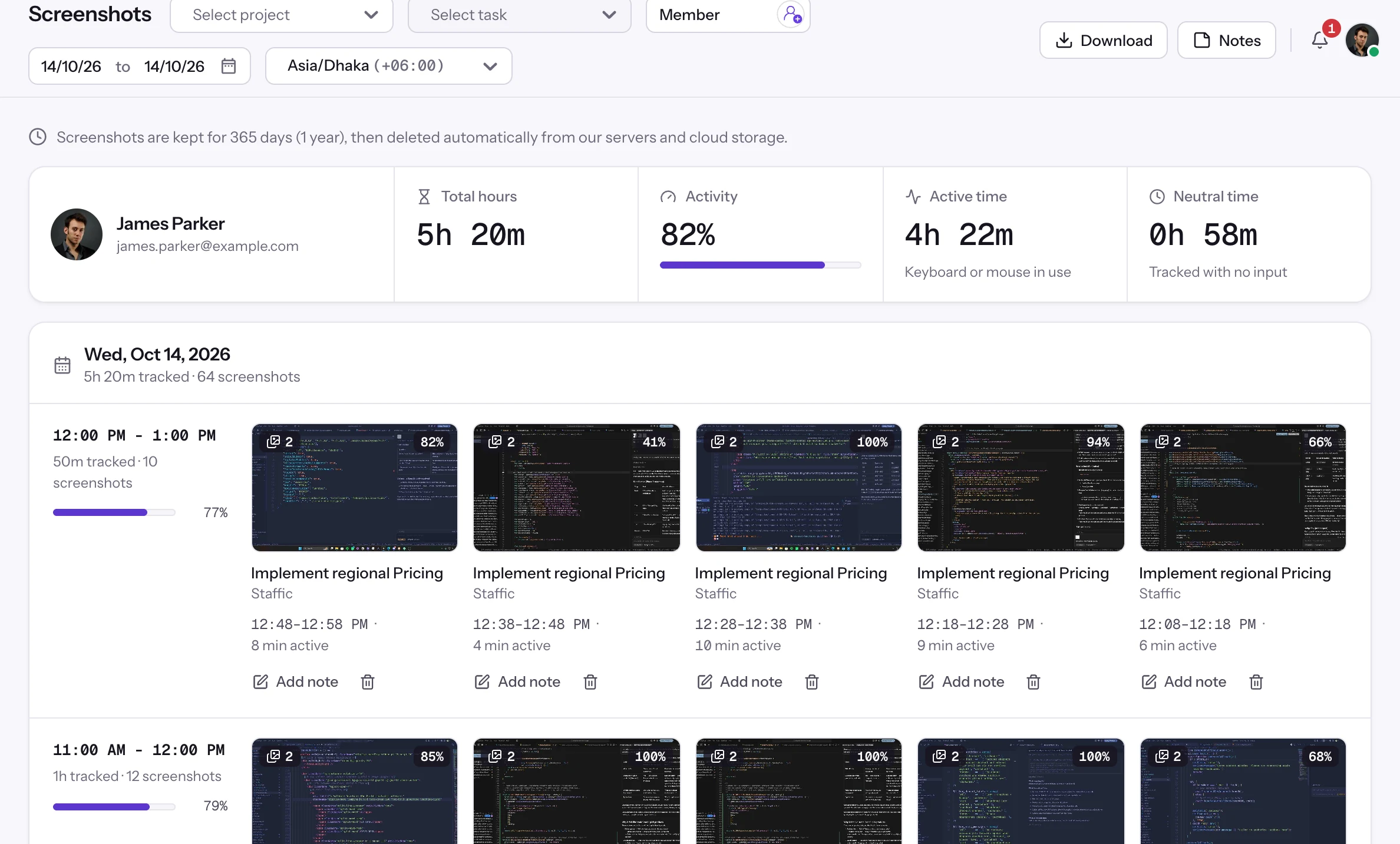
A time tracker gives you the hours behind the averages. In Staffic, members start a timer in the desktop app, and only that tracked time, plus any manual time added with a reason, counts. Time with the timer off, such as a lunch break, isn't counted, and tracking stops after 5 minutes without keyboard or mouse input.
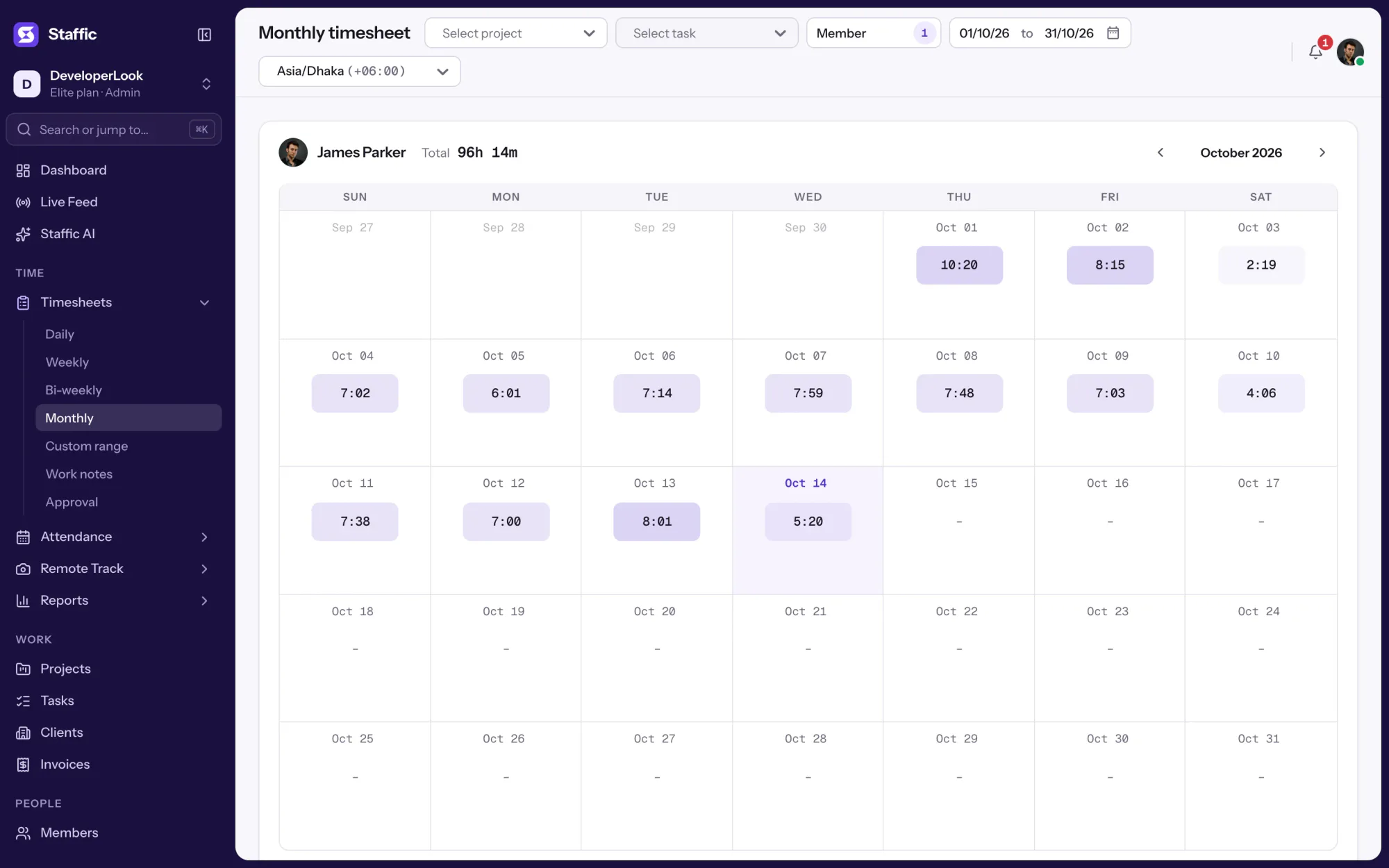
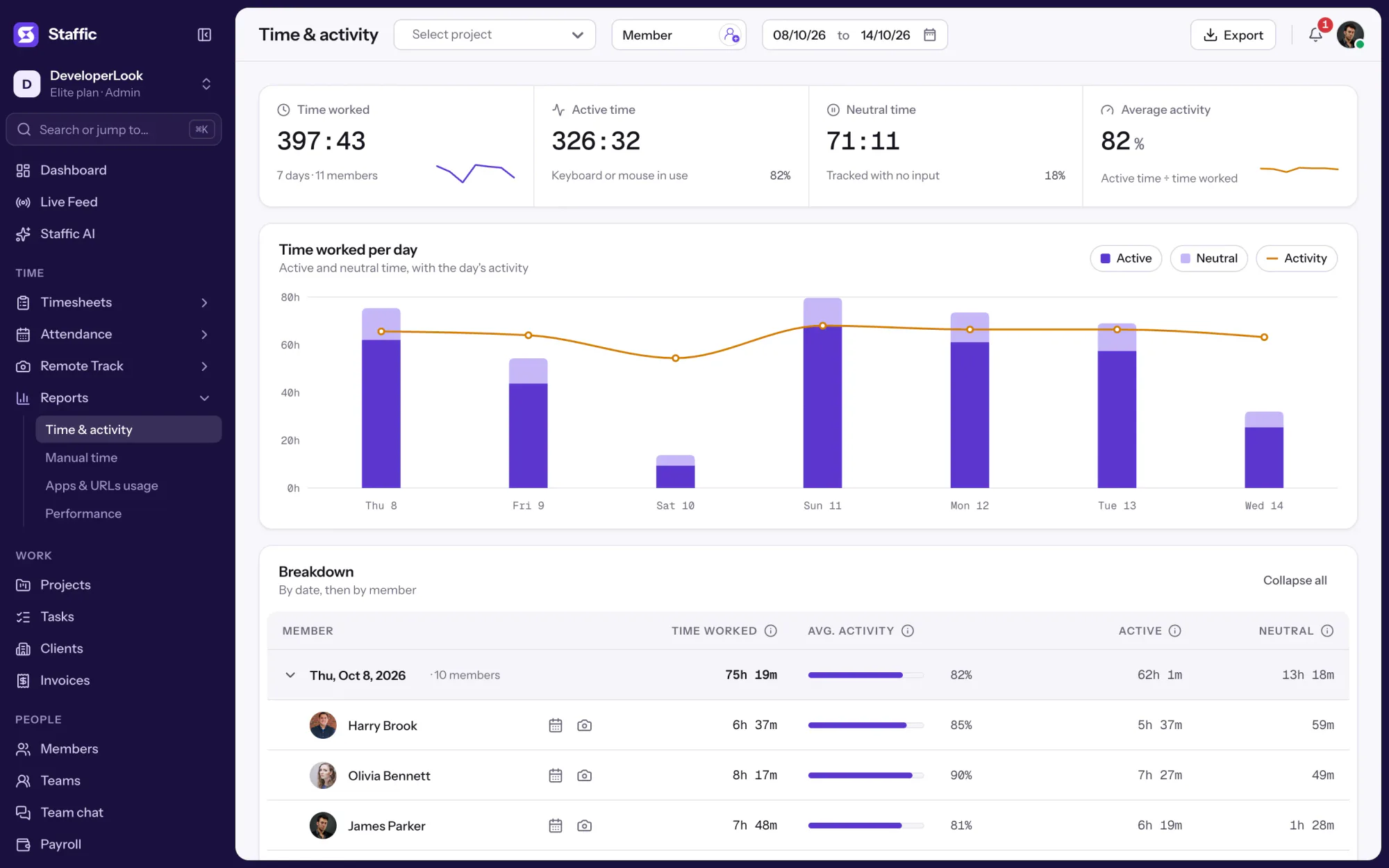
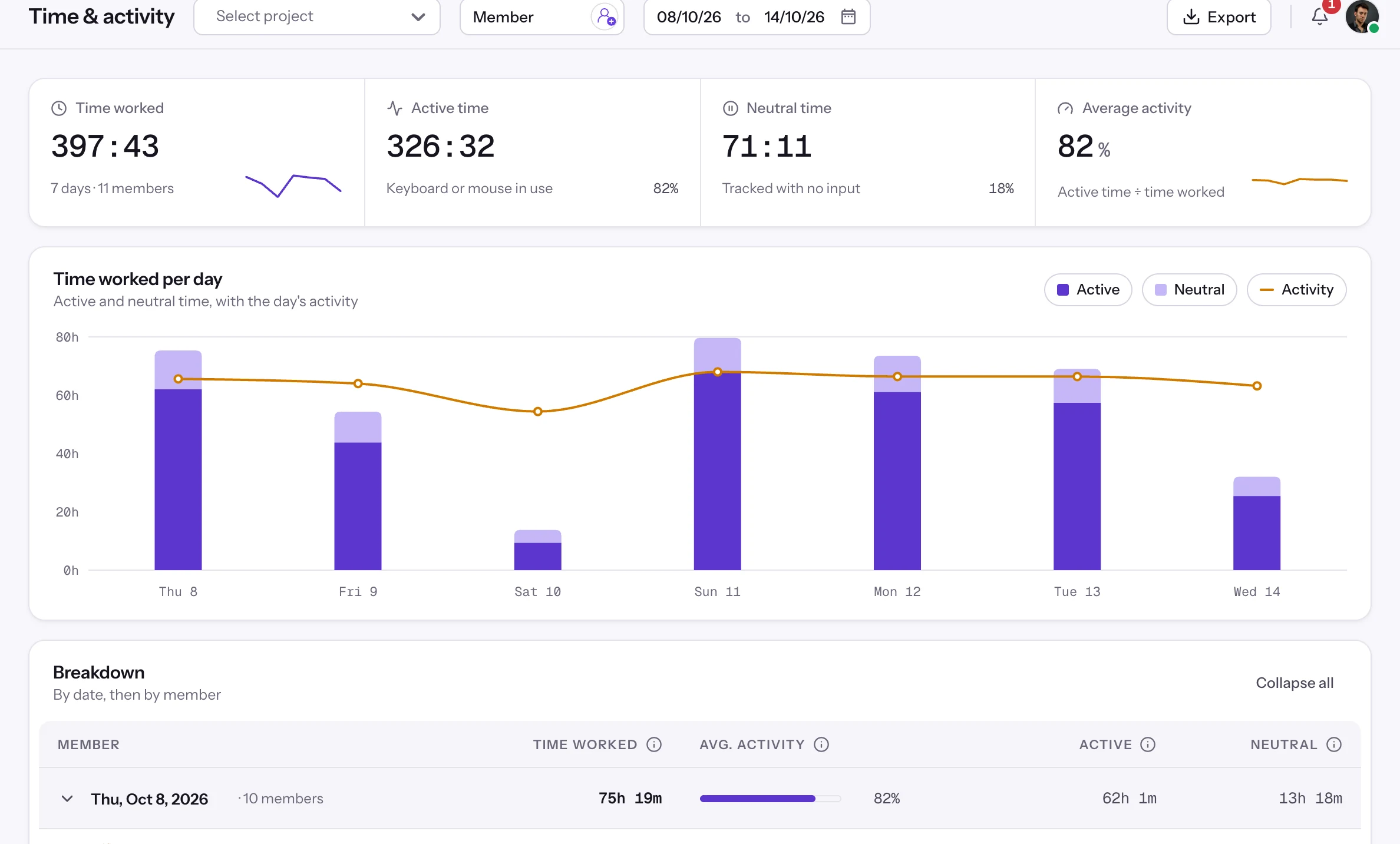
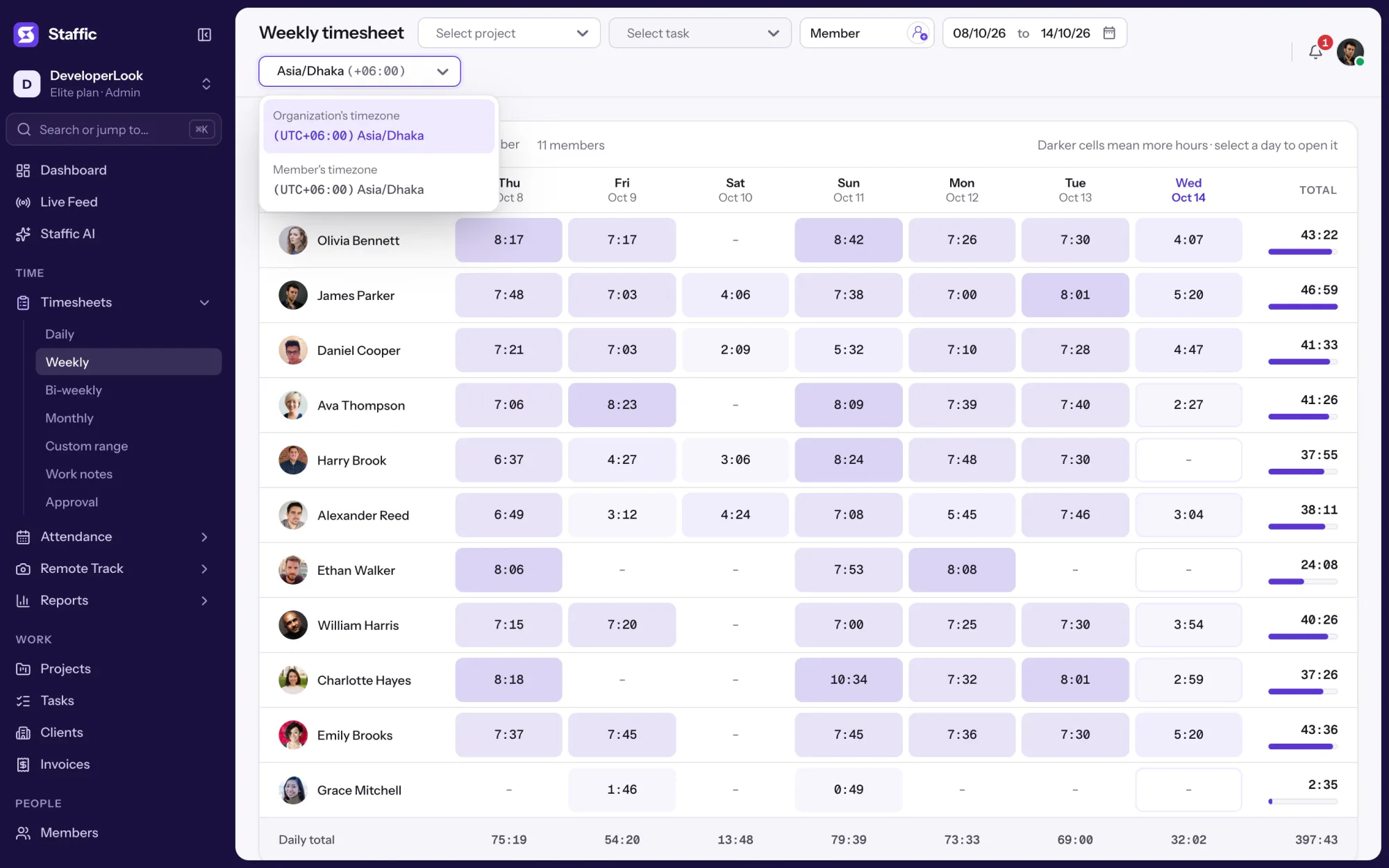
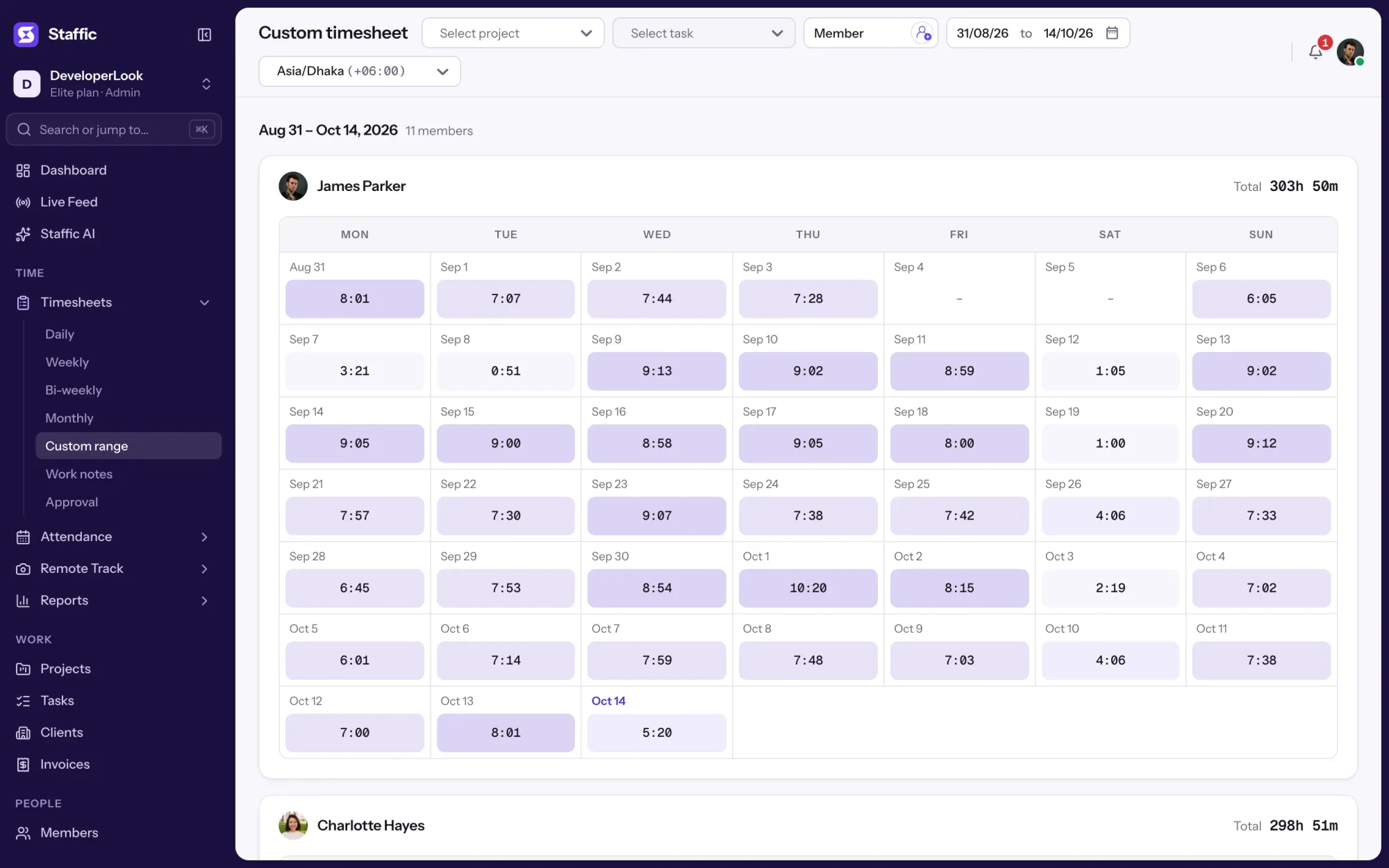
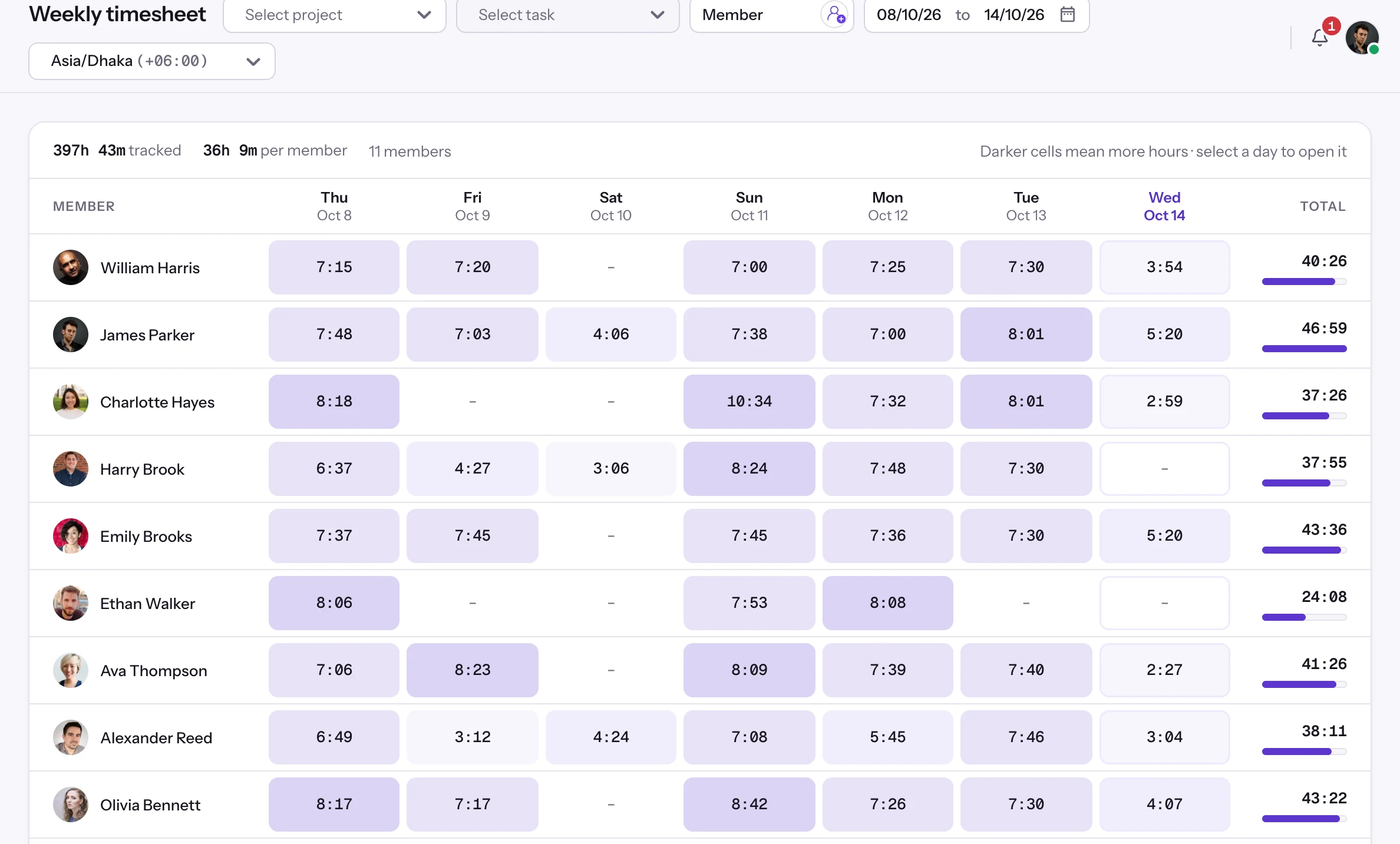
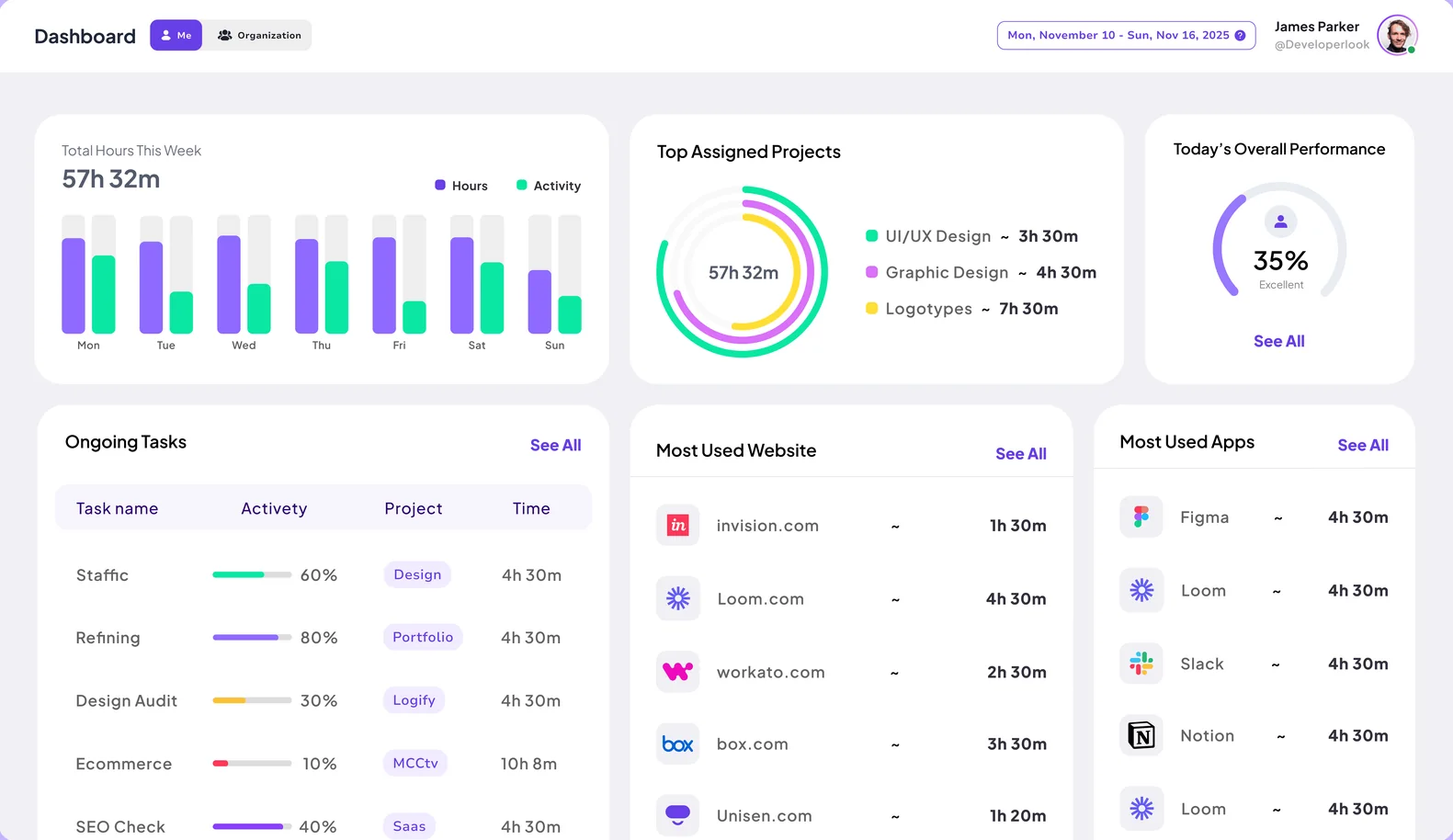
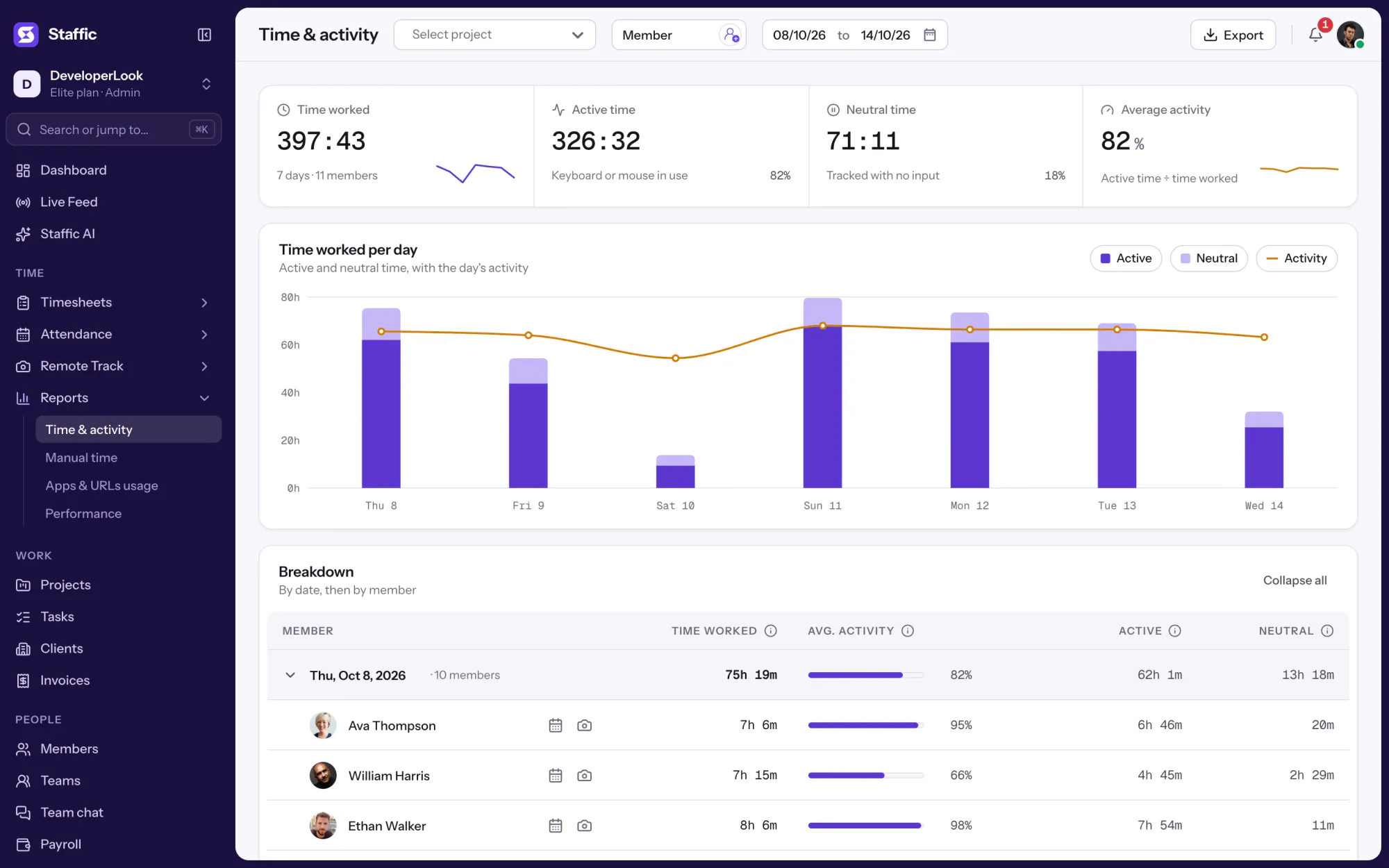
- The 17-week average: in the Time & activity report, pick a date range of 17 weeks (ranges go up to 366 days) and one or more members. The report shows time worked per member per day and exports to PDF or Excel, so you can divide each person's total by 17, after adjusting for any leave as described above.
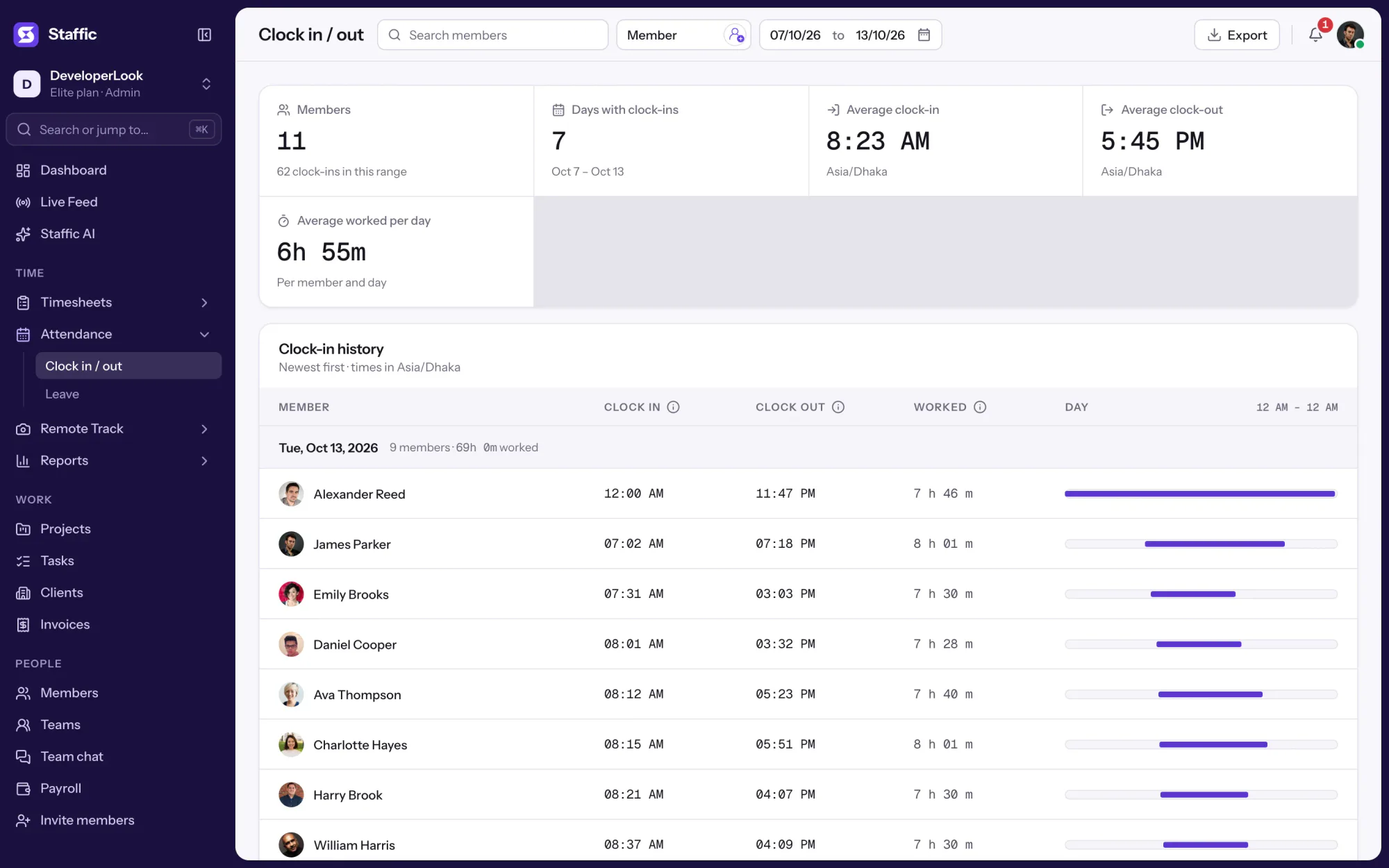
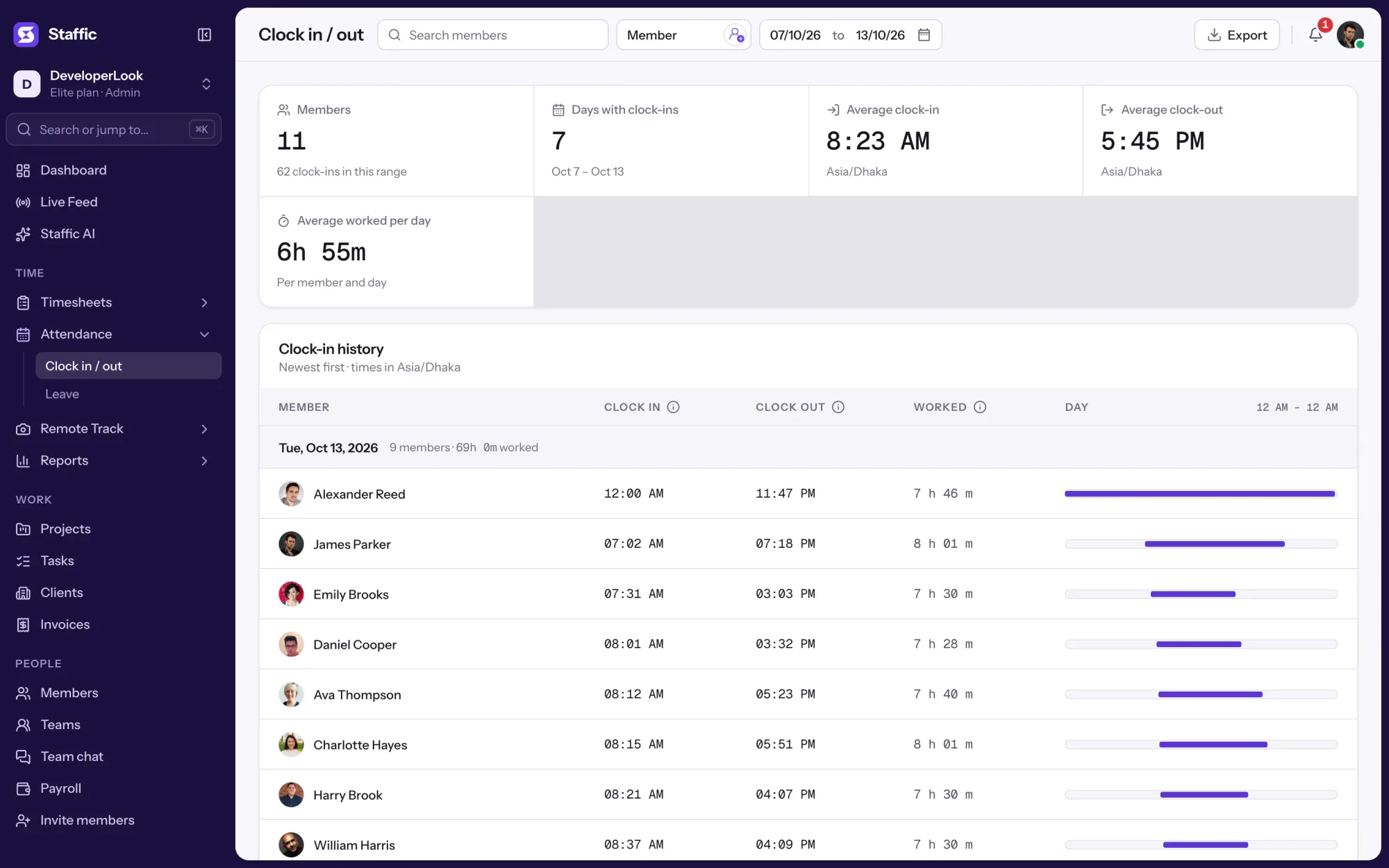
- Daily rest: Clock in / out turns each day's first and last tracked session into a clock-in and a clock-out time. Reading one day's clock-out against the next day's clock-in shows the gap between working days. Our clocking in system page shows how it works without a separate punch.
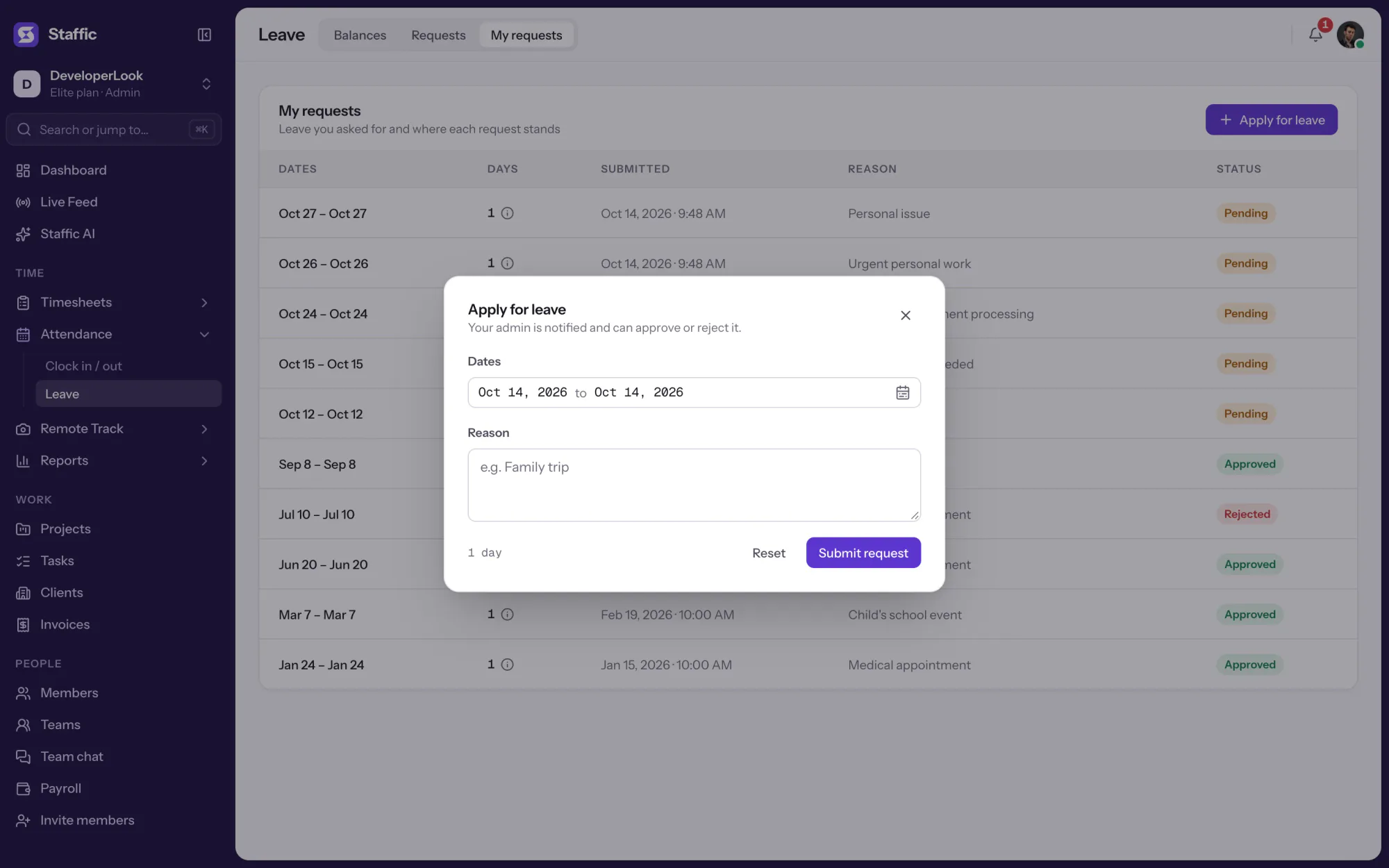
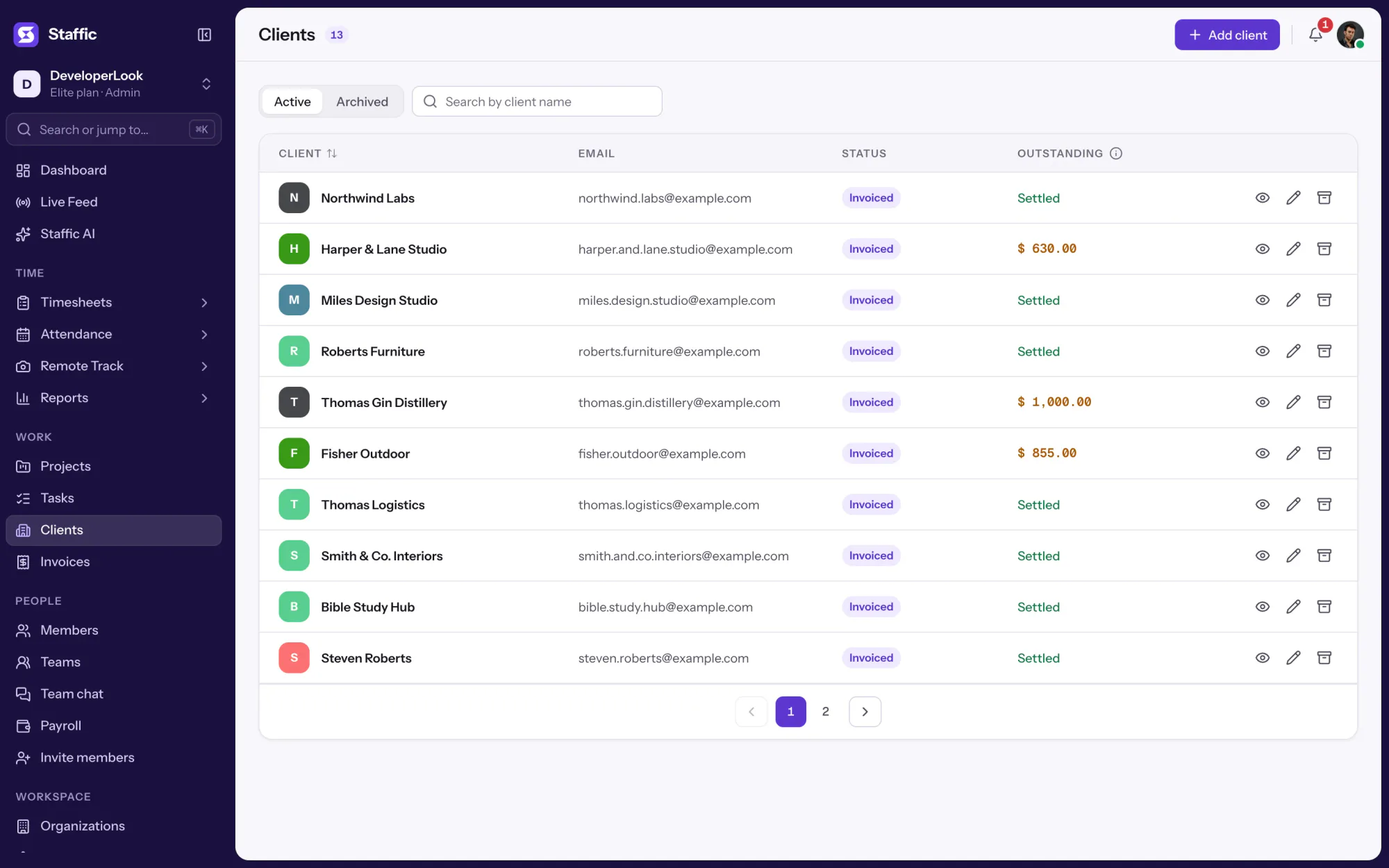
- Holiday and absence: members apply for leave with a date range and a reason, admins approve or reject it, and the Balances tab shows days taken and available for each member. A request counts every calendar day in its range, weekends included. See absence management software for how past absences are recorded with a reason.
In short: the Working Time Regulations cap the average working week at 48 hours unless a worker opts out, guarantee breaks, daily and weekly rest and 5.6 weeks' holiday, and ask you to keep records that show the limits are met. Write the rules into your attendance policy, keep an honest record of hours, and use our guide on how to calculate hours worked if you add them up by hand.
FAQ
What is the maximum working week in the UK?
For most adults, it's 48 hours a week on average, normally averaged over 17 weeks. A worker can go past 48 hours in a single week as long as the average stays within the limit, or they can opt out in writing. Workers under 18 can't work more than 8 hours a day or 40 hours a week, with no averaging.
Can an employee opt out of the 48 hour week?
Yes, if they're 18 or over and the choice is voluntary and in writing. The opt out can last for a set period or indefinitely, and the worker can cancel it with at least 7 days' notice, or up to 3 months if the agreement says so. Employers must keep a record of who has opted out and can't treat anyone unfairly for refusing.
What is the difference between the working time directive and the Working Time Regulations?
The working time directive is the EU law, and the Working Time Regulations 1998 are the UK law made to implement it. GOV.UK uses both names for the 48 hour rule. For staff in England, Wales and Scotland, the rules to follow are the regulations as amended, including the changes from 1 January 2024.
Do breaks count towards the 48 hour week?
No, breaks when no work is done, such as a lunch break, don't count. Working lunches, job-related training, time on call at the workplace and travel that is part of the job do count. Paid or unpaid holiday and travel to and from a fixed place of work don't count towards the average either.
How long do employers have to keep working time records?
Two years from the date the records were made. Regulation 9 asks for records adequate to show that the weekly limit, the young worker limits and the night work rules were met. Since 1 January 2024 they can be in any reasonable format, and you don't have to record daily hours if you can show compliance another way.
Are bank holidays part of the 28 days' holiday?
They can be. Employers don't have to give bank holidays as paid leave, but they can count them as part of a worker's statutory 5.6 weeks, which is 28 days for someone working 5 days a week. An employer can also choose to give more leave than the legal minimum.
Sources
- The Working Time Regulations 1998, regulation 4: Maximum weekly working timelegislation.gov.uk
- The Working Time Regulations 1998, regulation 5: Agreement to exclude the maximumlegislation.gov.uk
- The Working Time Regulations 1998, regulation 5A: Maximum working time for young workerslegislation.gov.uk
- The Working Time Regulations 1998, regulation 6: Length of night worklegislation.gov.uk
- The Working Time Regulations 1998, regulation 9: Recordslegislation.gov.uk
- The Working Time Regulations 1998, regulation 10: Daily restlegislation.gov.uk
- The Working Time Regulations 1998, regulation 11: Weekly rest periodlegislation.gov.uk
- The Working Time Regulations 1998, regulation 12: Rest breakslegislation.gov.uk
- The Working Time Regulations 1998, regulation 13: Entitlement to annual leavelegislation.gov.uk
- The Working Time Regulations 1998, regulation 13A: Entitlement to additional annual leavelegislation.gov.uk
- The Working Time Regulations 1998: Explanatory Notelegislation.gov.uk
- Maximum weekly working hoursGOV.UK
- Maximum weekly working hours: Calculating your working hoursGOV.UK
- Maximum weekly working hours: Opting out of the 48 hour weekGOV.UK
- Rest breaks at workGOV.UK
- Rest breaks at work: Young workersGOV.UK
- Night working hoursGOV.UK
- Holiday entitlementGOV.UK
- How to use Clock in / outStaffic documentation
- How to use the Time & activity reportStaffic documentation
- How to use LeaveStaffic documentation